In conversation with Peter Nietzer - September 2025
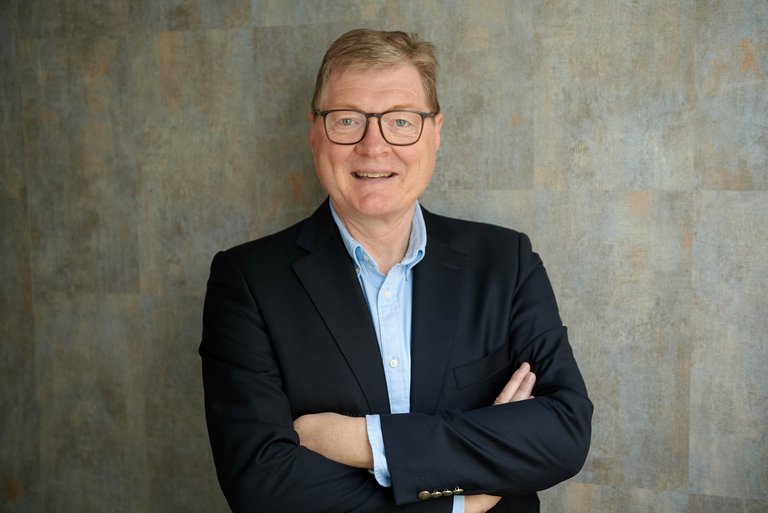
In an online interview with Peter Nietzer, he describes his time at the Schloss-Schule as very enriching. Above all, the fact that he was well prepared for life and learned essential values such as reliability and commitment. He also learned what community means and how to stand up for each other, both at boarding school and at school. These were all fundamental principles for him that have stayed with him to this day.
What is the first thing that spontaneously comes to mind when you think of your time at the Schloss-Schule?
The first thing that comes to mind is the small classes. There were about 15/16 pupils up to Year 10. In the course level, I remember around 10-12. That was very pleasant and, of course, a completely different learning atmosphere. It forced us to pay more attention. I also remember the strong sense of community in the school and in the boarding school. Everyone made an effort and you could clearly feel the commitment and passion of everyone involved. The interactions between the teachers, the boarding school staff and us young people were very different from those at school before. We were treated more as equals and everyone was much more approachable. At school, great care was taken to ensure that everyone kept up and no one lost touch. I spent a total of four and a half years at the Schloss-Schule until I graduated.
Can you tell us something about your schooling before you came to the SK?
I was born in Heilbronn and went to elementary school there. After the 4th grade, I decided to go to a science-oriented grammar school. Here I had to repeat the 8th grade. I was on the bus for longer every day, so it was difficult to make friends outside of school. Simply because the distance was so great. I then transferred to Kirchberg in the course of year 9. I didn't find the change too difficult, but it did take some getting used to; you had to get used to some rules and procedures that didn't exist at home.
What has changed in Kirchberg?
There were far fewer pupils. As a result, everything was much more manageable and personal and learning was also much more intensive. I took much more from the lessons here. The teaching was more focused due to the small classes. A lot of the content was worked on in joint discussions and the teaching situations were much more active. The fixed learning times also helped me a lot with structuring. My performance gradually improved over a short period of time.
I also have very fond memories of the student exchange with France.That was really great! I found out for myself that I have a talent for languages and that I find it easy to learn and communicate in a foreign language. I still use English and occasionally French in my professional and private life. Being able to communicate in the other person's language always makes it easier to connect with other people. This is the basis for building any relationship, whether business or personal.
What have you found formative? What values, life lessons and other things still guide you today?
Mutual respect has been very formative for me - even if it wasn't the case here and there. Both at school and at boarding school. I also learned that there are rules that have to be followed for the good of everyone. And that these apply to everyone.
What I still remember and has shaped me to this day is "tackling things myself". It is very easy to criticize things and express dissatisfaction. The key is to do better yourself first. It used to be that if you had something to complain about in the kitchen, you went into the kitchen yourself, looked at everything, got involved, got involved in the shopping, the preparation... But "just" complaining was not an alternative. I have also tried to maintain this principle in my professional career wherever possible. And what guides me is the clear realization that you often have to go the "extra mile" to be successful - shortcuts sometimes work, but not always.
What happened after the SK?
I did my military service for 15 months straight after leaving school. I was very lucky here, first working in an air force school and then in the area of military fighter aircraft command. I then started my business studies in Munich and graduated in Nuremberg. During my studies, I made friends for life and also met my wife. A special experience was working for AIESEC, a worldwide organization of business students that arranges international internship exchanges. I had my first management tasks there and ended up doing an internship in Asia myself, which gave me a lot of new insights.
I also did other interesting internships during my studies and had a job offer about six months before I finished my studies. The first phase of my professional life was characterized by intensive work in two international management consultancies for industrial companies - a total of 11 years; after that I decided to become an independent investor in venture capital and private equity. That was in 2000 and I have never regretted it. Founding a company is exciting, requires courage and suitable co-founders. Most - but not all - of the companies we have invested in have developed steadily and I have survived several crises, such as the bursting of the dot-com bubble, 9/11 or the global financial crisis, to name but a few.
Since 2013, I have been working with my own investment holding company as an investor in the venture capital sector. My main focus is on financing and supporting tech start-ups in their early stages. My great strength is strategy, financing and company building. Of course, I also make my network available to founders, but also my experience of founding and financing a start-up. This is very helpful, especially at the beginning. I am also the chairman of the supervisory and advisory boards of three technology companies. I'm not thinking about retirement at the moment. I like working and I still enjoy it. In some respects, however, I now give myself more freedom and divide things up more flexibly. That works very well. My wife is also still working and is an entrepreneur herself.
If you've ever had a class or year reunion, what stories and anecdotes would you like to share?
Unfortunately, a few of our class can no longer be found. That's a real shame. But I'm still in good contact with a few of them.
One thing I remember very fondly was the joint construction of the clubhouse back then. That was a real joint project! Because we built it together, we also had a close relationship with the building and enjoyed using it. In the evenings to listen to music, spend time together and sometimes have a beer.
There were also times when we got out in the evening and went into town to Kirchberg for a beer in the pub. Unfortunately, we met our teachers and mentors there. The beer thing soon came to an end and of course we had a chat about it the next day.
Joint trips, for example, the ski trips were always really great!
Looking back on your time at school, what would you do differently today?
I would do everything the same again. I might not choose the science-oriented grammar school that I first attended, but rather one with a focus on languages. I never really warmed to math. And stick to learning right from the start to avoid repeating.
Would you like to support the school and the current students?
If so, what could you imagine doing?
I could imagine being an active mentor for the sixth form, perhaps especially when it comes to developing career prospects. I already accompany young people on their way into working life or students when they are considering whether they want to be employed or start their own business after all.
What else would you like to share?
Finally, I would like to emphasize once again that a sense of community is important for all of us, also socially. And you learn this first in class at school. Everyone should look out for each other and look after each other. Sometimes you also have to learn to deal with the contrary thoughts of others.
I also want to encourage everyone to try things out, especially in a professional sense. You can achieve a lot with courage and the willingness to go the extra mile.
It is also important that young people engage with the political landscape and our democratic structure. Political engagement means taking part in shaping the process and also taking responsibility. In street campaigning, for example, you learn a lot about what moves people in society from talking to people.
In addition, everyone should get involved in social activities as far as they can and if their stage of life allows. It helps and also provides interesting insights into areas that would otherwise pass you by. I have been involved in a foundation for around 10 years and am now also the chairman of the foundation, which supports girls' education in Burkina Faso - and is expanding to Benin, Kenya and soon Senegal. It is enormously enriching to give something back socially and is fundamental for all of us!