Years 5 - 7:
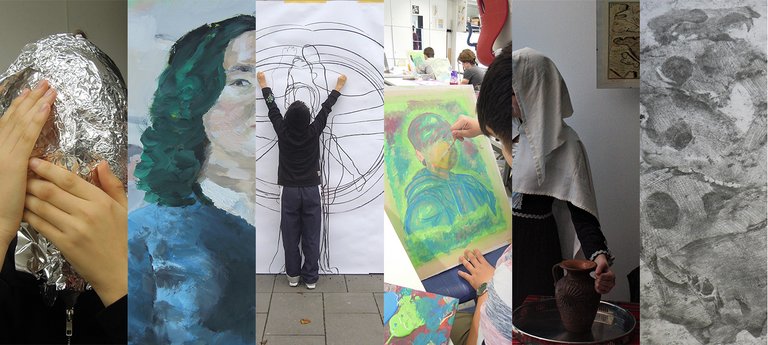
Trying out different artistic areas in addition to art lessons: pottery, woodwork, cooking, theater club, music club
Grades 8 - 10:
Profile as a core subject relevant for promotion with 5 lessons, including 4 lessons of BK and 1 lesson of theater.
Grades 11-12:
For the upper school, students can choose Fine Arts as a 5-hour advanced course or a 2-hour basic course.
Requirements:
- Enthusiasm for art
- Desire to work creatively
- Interest in theoretical and art historical content
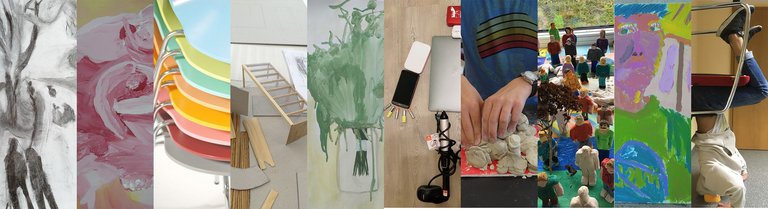
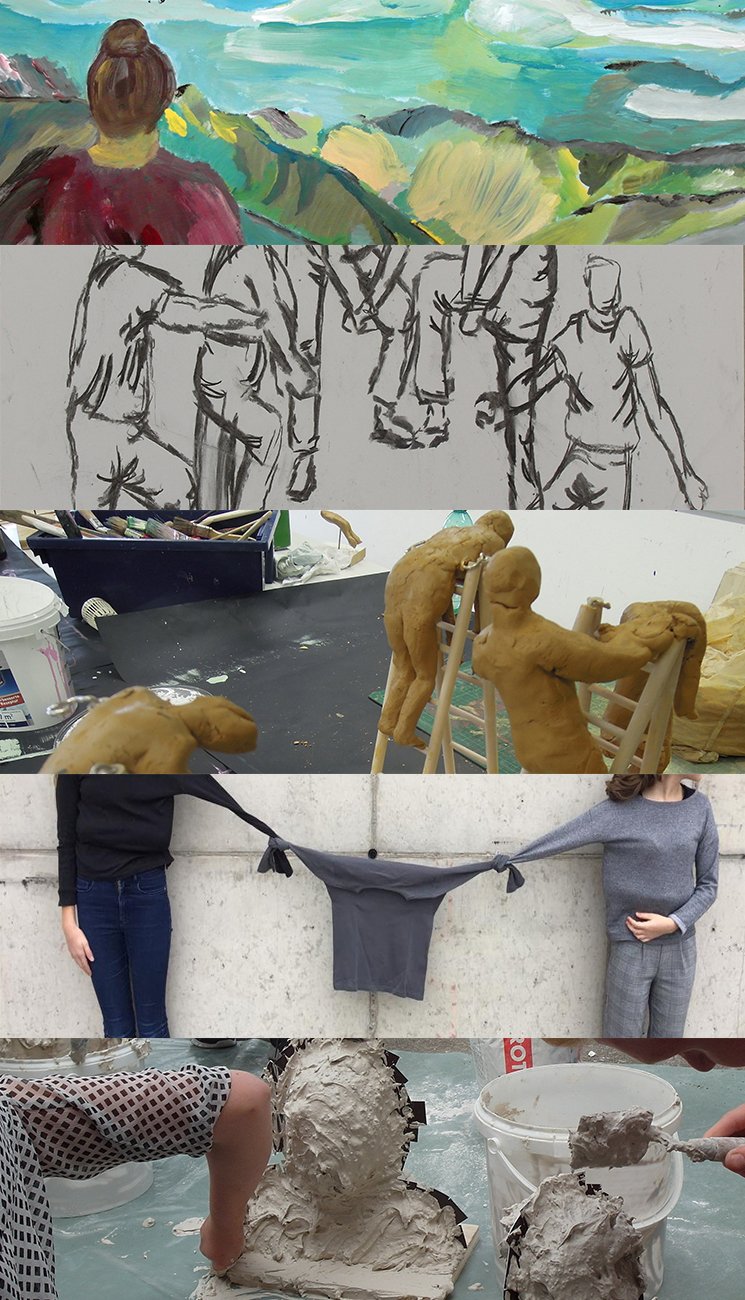
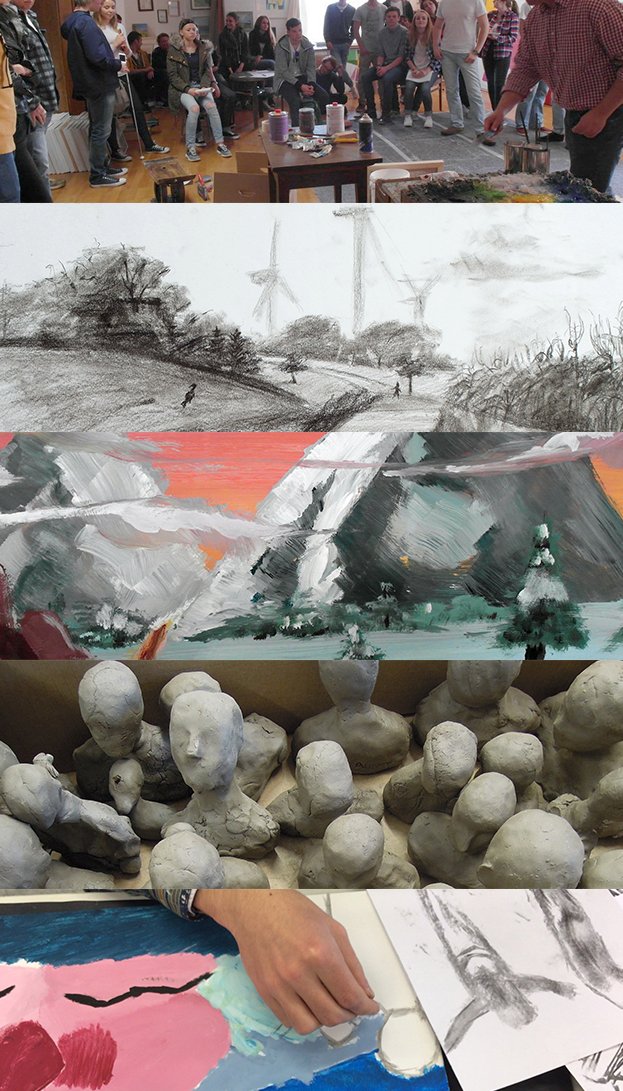
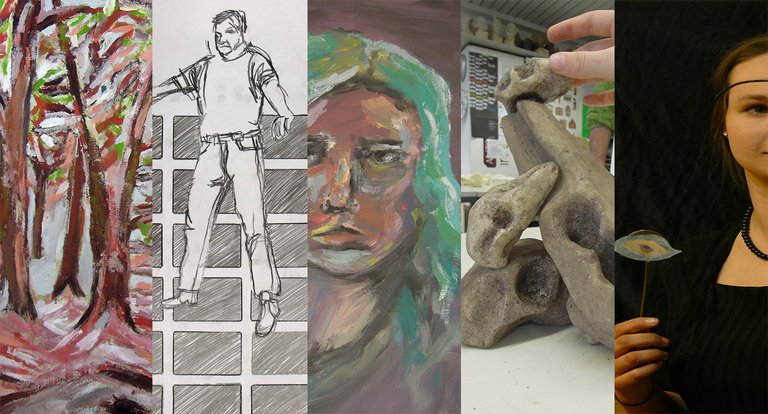
Here you can gain an insight into the works of our students.
Contribution to personal development
The subject of visual arts combines "head, heart and hand" in a unique way , linking rational, logical thinking with intuitive, emotional, visual thinking. This promotes not only artistic but also communicative and social skills in pupils and thus contributes to comprehensive personal development.
Cultural education - without culture, a society is without a soul
Art, theater, music and literature are an expression of the deeper self-image of societies, as they deal with the fundamental questions of human existence. They are the memory of humanity, without which our culture is like a tree without roots.
Art history is intellectual history and is therefore closely linked to history, religion, philosophy and social issues. Cultural education enables an open view of the world and society beyond its political and economic orientation. Cultural education focuses on the richness and diversity of life, beyond the purely useful and measurable.
Promoting creativity
The art profile promotes creativity: being creative is a basic human need and increasingly important for the future of our society. "The future must be constantly reinvented." (Picasso).
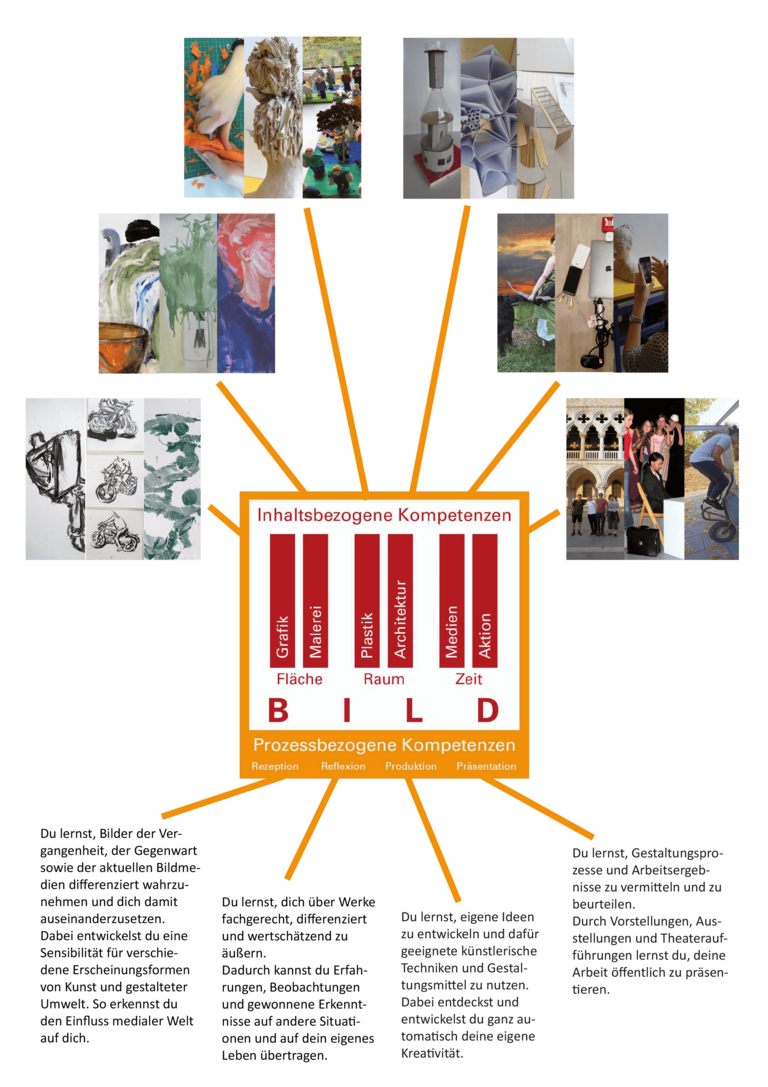
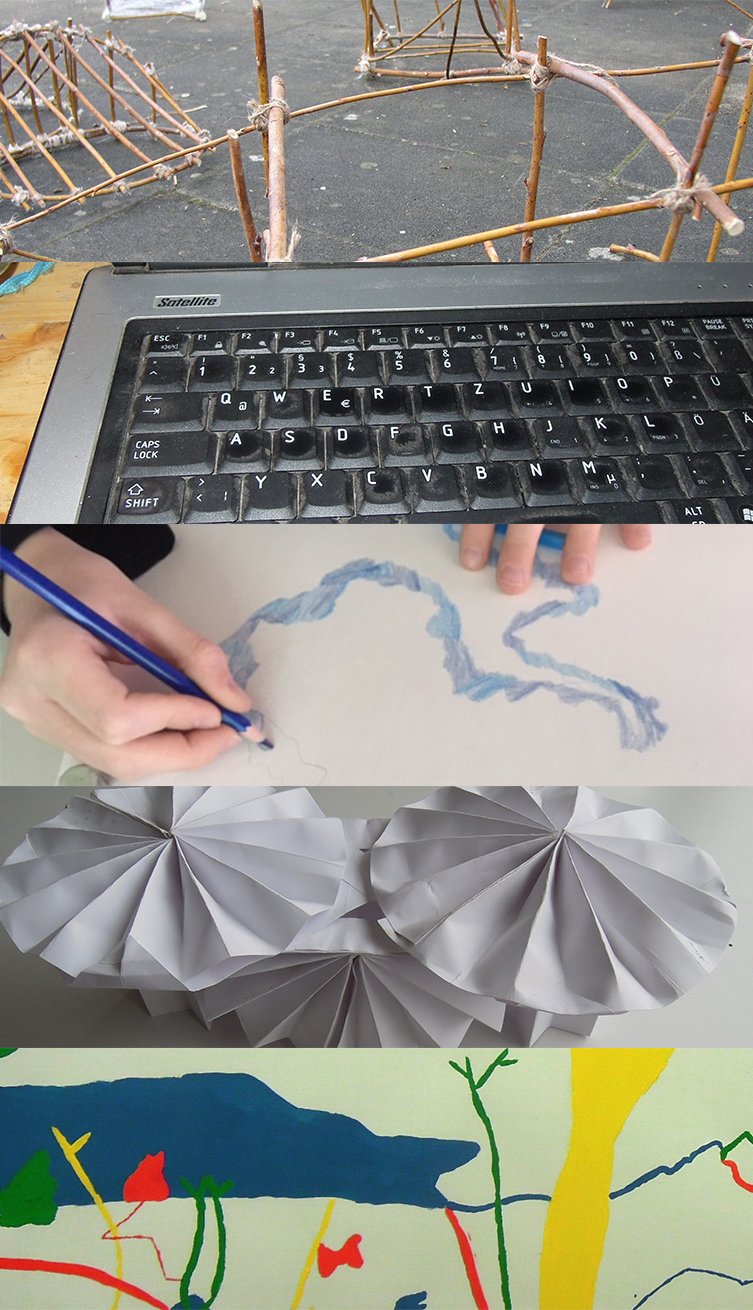
We promote methods of playful, experimental, inventive and creative work through a wide range of artistic materials, techniques and tasks.
Art lessons promote individual activity in an environment that is increasingly shaped by the prefabricated experience of others through the media and in which young people are becoming more and more passive. Drastic sensory overload in our society is increasingly leading to a dulling of the senses and experience. Art lessons promote learning processes through projects that enable pupils to experience autonomy, individuality and personal responsibility.
The art profile develops the ability to create: the need to create something is innate in all people, it is an important element of personal appropriation of the world. However, our environment and society offer fewer and fewer opportunities for this. The ability to create is promoted in two directions.
On the one hand, the ability to represent: the focus here is on illusionistic forms of representation - e.g. spatial and physical representation, nature drawing, learning representation techniques.
Secondly, free expression: this is a basic element of self-awareness as an independent personality.
Art lessons make an important contribution to the use of modern media. It provides an insight into the use of imaging techniques and digital communication. At the same time, it also promotes a responsible, media-critical awareness and makes a comprehensive contribution to general media education.
Theater - minor subject of the art profile

The approaches of the art profile subject are expanded and deepened by the subject of theater: Like no other pedagogical field, it offers space for social learning in order to discover and develop individual strengths. Closely interwoven with almost all school disciplines as well as social, cultural and professional areas of life, it opens up a multidimensional world of learning and experience.
The central design categories of body, space and time build bridges to subject-specific skills such as those taught in sport, music and art: Getting to know the body and movement possibilities; trying out rhythm, melody and the effect of musical elements; shaping the relationships between body and space or static and moving images. Theater is a cultural and social event in front of, on and behind the stage: working in a group trains empathy and social skills. The possibilities of texts and their possible meanings are experienced. The diverse professional world of theater, film and media also broadens perspectives far beyond school.
In addition to aesthetic categories, the understanding of spatial and stage design encompasses a wide range of technical and scientific aspects such as lighting, sound and directing. Role work enables access to unknown, invented and experienced worlds of experience. Reflection and feedback culture play an important role here.
The art profile offers insights into a wide range of creative professions
Choosing the art profile not only offers more time for creativity, but also provides insights into a wide range of creative professions, from the various design professions to architecture or cultural management. Time for museum visits, studio visits, artist talks and excursions to art academies and design colleges are also very important . In addition, the basics are taught that are necessary for all professions whose forms of work require skills such as independence, initiative, project planning, teamwork, confidence and knowledge in dealing with media and the Internet.
The art profile promotes the development of a holistic, independent, open personality, regardless of what the student wants to do later in life. Art lessons are about actively creating forms, inventing the future, giving meaning to things, not just discovering their meaning.