We take the time to get to know each student in all their personal facets...
... right from the start! Even the admission interview at Schloss-Schule Kirchberg is therefore of great importance. Regular, intensive discussions are a recurring theme throughout everyday life at the school and boarding school.
The team of teachers and supervisors at the Schloss-Schule regularly talk to the pupils about their individual attitudes and behavior during lessons, in remedial courses, when interacting with others and in their free time.
In addition, the respective work results are comprehensively analyzed, the communication and learning behavior is carefully recorded and discussed in detail in the team and with the students.
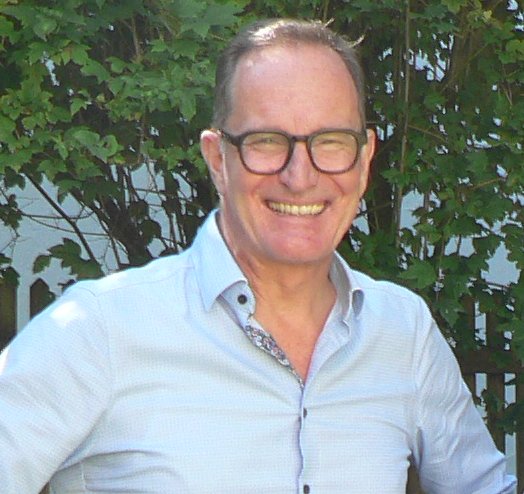
Joachim Scholz - former pupil & mayor of Schöntal
I immediately felt welcome and at home in Kirchberg. I am very grateful to the teachers and educators at the school at the time. They provided me with a solid foundation on which I was able to build after my time at school. The foundations for the rest of my life were largely laid at the Schloss-Schule. As a result, I still have a deep connection with Kirchberg today. I had and still have a good path in life and I am very grateful for that.
To our alumni portraits
Comprehensive recognition of potential at the Schloss-Schule Kirchberg boarding school
However, truly successful development is not only measured by school grades - it also focuses on positive personal development as a whole.
In order to optimally support our pupils in their development, it is first of all important to correctly assess them both in and out of school. Only support that is geared towards the individual can be successful. This is why we at the Schloss-Schule attach so much importance to a comprehensive assessment of potential. Only on such a basis can targeted support and encouragement be provided; not only in the school environment, but as part of a holistic approach that sees and accepts all facets of the individual pupil.
Teaching in small classes at the Schloss-Schule
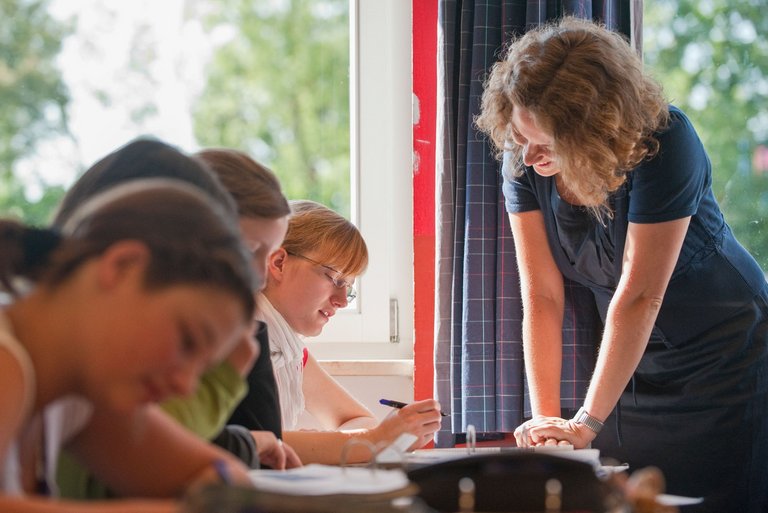
With individualized and differentiated lessons in small classes with a maximum of 20 pupils, free forms of work and alternative performance feedback, we aim to do justice to the personal diversity of our pupils. Their involvement in the selection of teaching content and methods emphasizes the shared responsibility of our students on the one hand and our teachers on the other for optimal teaching.
Our broad range of support beyond the classroom helps to close gaps and improve performance. Preparing for and participating in competitions in small research groups unlocks potential and awakens curiosity that extends beyond the classroom.
"Support" and "challenge" in the classroom are two sides of the same coin - the desire to guide our children and young people to define their own goals and to give them the pleasure of striving for more knowledge and better performance on their own responsibility.
Minimal loss of lessons thanks to a special school concept
In order to directly address the issue of "school absences", which is a major problem for many schools, we developed a special concept for school absences many years ago.
In recent years, around 97% of all lessons at the Schloss-Schule Kirchberg grammar school have been held as normal. There is a special procedure at our school in the event of lessons being canceled: If, for example, a teacher calls in sick, a subject lesson is "replaced" by another class-specific subject lesson - e.g. a German lesson is replaced by a Maths lesson. In the further course of the school year, such lessons will be swapped back if possible. Only in absolutely exceptional cases will another, quasi "foreign" specialist take over the supervision of the class and work with the pupils on current homework or previously prepared worksheets, for example. As a result, class absences can be 100% ruled out in the lower school, so that we can give students and parents a care guarantee.
In fact, with our concept, we achieve the prescribed minimum number of lessons for absolutely every school subject at the Schloss-Schule.
For our local pupils, there is homework supervision from Monday to Thursday in years 5 and 6 if there are sufficient registrations.
Homework is to be done by all boarding school students themselves, but is supervised and accompanied. During our so-called learning times (1.5 hours per day for grades 5 to 9 - with an individual 15-minute break by arrangement), this is done by trained teachers and subject teachers.
Our educators are the first point of contact, help with self-organization and provide support with structural and learning methodological problems. If the subject is more in-depth, our pupils are "redirected" to the so-called learning rooms, where subject teachers help with specific subject-related questions.
All those involved (pupils, class teachers, subject teachers, mentors, study room supervisors) are in close contact with each other so that it can be recognized immediately whether additional support measures beyond homework supervision are necessary.
Our Schloss School concept also includes basic courses in the core subjects of English, math, and Latin (1.5 hours per week each) for boarding school students up to grade 10. If deemed appropriate, 3 to a maximum of 10 students (on the recommendation of a mentor, subject teacher, or homeroom teacher) participate in these courses. These basic courses serve to work on specific gaps.
As the third level of our Schloss-Schul support system, we also use the system of individual tutoring/support for more extensive gaps in learning material - the decisive factor here is: always in close and intensive exchange with the respective subject teachers and class teachers.
If tutoring is used, we rely on experienced and proven non-professionals from the surrounding area for routine help and exclusively on proven specialists for teaching new, incomprehensible content. Those responsible have formed their own professional opinion of these specialists, so that the quality of this support can be reliably guaranteed.
To ensure that our students are as well prepared as possible for the examination phase of the Abitur, we organize an intensive week every year. During this week, additional lessons are held in exam-relevant subjects to prepare students specifically for the Abitur and provide them with particularly intensive support.
In grade 7, our students complete their first GFS (Gleichwertige Feststellung von Schülerleistungen, or equivalent assessment of student performance), which is weighted like a class test. To support them, we hold a study day in all grade 7 classes to teach basic content and procedures.
Students receive an introduction to important steps such as researching and selecting information, structuring it, and creating excerpts and mind maps. In addition, key requirements for written work, dealing with sources, writing a handout, and structuring an oral presentation are discussed. Presentation formats and the use of aids are also addressed.
The study day serves to give students an initial orientation and prepare them for independent work on their GFS. Further consolidation then takes place in the individual work process.
Many students first need to learn how to acquire knowledge properly. Learning to learn is established as a school subject in grades 5 and 6. First, students reflect on their working conditions at home, after which they can create a suitable working and learning environment for themselves. They are also taught strategies for completing homework effectively and learning vocabulary independently. Different learning methods and techniques for preparing for class tests are also an essential part of learning to learn.
Who better to teach students a foreign language on an equal footing than young people who speak that language as their mother tongue? For example, our English language assistants from the USA practice everyday English conversation with our students outside of the classroom setting. But there are also opportunities from other countries.
In years 5 and 6, we test our pupils' spelling skills after a few weeks using the Hamburg Writing and Reading Test. If pupils exceed a certain number of errors, we can use this test to determine that there is a need to catch up. Students can then take part in our LRT course once a week, in which we work specifically on common spelling difficulties, such as difficulties with capitalization, elongation and sharpening. In this way, any gaps in knowledge at the Schloss-Schule are effectively closed right at the beginning of the grammar school career.
Known talents are taken into account in our school structures - here we react individually and flexibly and provide interest- and talent-based offers. In addition, we also develop extracurricular opportunities to promote talent with particularly gifted pupils. For example, we can offer pupils the opportunity to study alongside their lessons.
Competitions in a wide range of subjects provide our students with valuable stimuli and offer a completely different approach to the subjects and their content. The focus here is on the idea of a challenge, there is something to win and you don't have to worry about bad grades. Pupils often get involved here with enthusiasm, which also has an impact on their willingness to learn and perform.
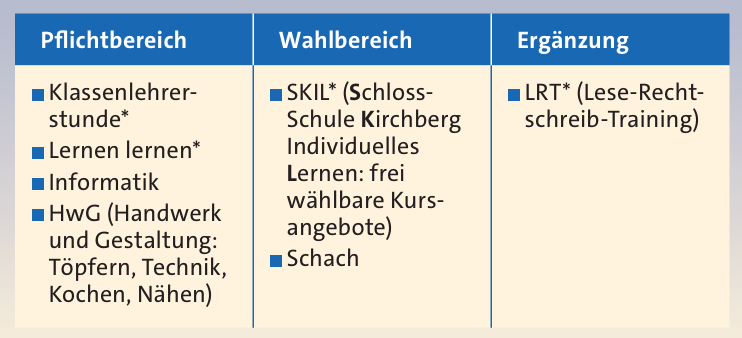
At the Schloss-Schule, children in years 5 to 7 enjoy a special form of teaching. In addition to everyday lessons, different courses offer our pupils the opportunity to experience learning in a different way according to their inclinations and talents. Our pupils learn sustainably in projects according to their own interests. Methodical and social learning are also an integral part of the lessons.
Our elective module SKIL Schloss-Schule Kirchberg- Individual Learning has the pedagogical background of recognizing the special characteristics of the individual pupil and supporting him/her according to his/her potential.
This is because pupils learn at different speeds, with different levels of intensity and with varying levels of motivation. The aim is therefore to enable different learning paths in addition to the pure transfer of knowledge. The module is divided into these areas (see diagram).
Our 10+ concept at the Schloss-Schule Kirchberg
This model is for our career changers, secondary school graduates, and international students in grades 9 and 10. We pursue the following goals with our 10+ class: We want to systematically prepare all students for the course level - both methodically and in terms of content.
We want to provide students with comprehensive support in their personal development and strengthen the development of social skills, i.e. independence, willingness to make an effort, self-management and group inclusion.
The active participation in shaping the learning environment and the regular review of learning behavior in class 10+ promotes personal responsibility , which becomes essential in the course level. The subject content is bundled and made more manageable without having to compromise on level.
Basic knowledge from the intermediate level is repeated in a targeted manner and placed in direct connection with the essential subject and methodological content of year 10.
Our concept has proved particularly successful for students from outside the school as a boarding secondary school to obtain their Abitur here with us!
The first foreign language is taught in small groups. Learning to learn also plays a central role. The aim is to enable pupils from a wide range of educational backgrounds to achieve the same educational goal, namely the Abitur.