General conditions & pedagogy of our boarding school
The special framework conditions and the pedagogy of our boarding school create a basis that gives everyone involved a sense of security. Because one thing is clear: no parent finds it easy to leave their child in other hands. That is why we have created a place where they feel almost as comfortable as at home: our Schloss-Schule Kirchberg boarding school. We see every pupil at the Schloss-Schule as an individual personality whose development is our primary goal. This is precisely where our strength lies: we recognize the talents of each individual student in detail and help him or her to reach their full potential - both academically and personally.
The structure of our boarding school Schloss-Schule Kirchberg
In our boarding school, which is as down-to-earth as it is family-oriented, our students can develop as individuals, gain a wide range of experiences and at the same time learn to live in a community and make their own contribution. Our most important goal is for each individual to feel comfortable and in good hands!
The special framework conditions of our boarding school form the basis for this:
-
Clear boarding school structures
Life at our boarding school offers clear structures without restricting the development of individual interests too much. Fixed appointments throughout the day, week and year provide rituals that give the individual and the group stability. -
Caregivers at the boarding school
Approximately 100 pupils live together with around 15 educators in our boarding school in four houses. Each teacher, who we call a mentor, is therefore a reference person for a small group of pupils. The mentor is there to answer any questions, concerns or issues that their protégés may have and is always on hand with help and advice, no matter what the issue. All mentors have separate apartments in the respective boarding school buildings. -
Openness of our boarding school
Another special feature of our boarding school is that it is not a self-contained unit. In addition to the 100 boarders, our grammar school is also attended by 250 pupils from Kirchberg and the surrounding area. This means that our grammar school with boarding school is integrated into the picturesque town center of Kirchberg, which is within walking distance, and offers the opportunity to build friendships between local and boarding school students. Our boarding school routine has a clear structure but still offers our students time for individual plans. -
German boarding school - with international students
Our international students are also a special feature of our school. Our multicultural community and getting to know other cultures enriches our school and our boarding school. -
Homework supervision
In addition to school, targeted homework supervision takes place every day , the so-called learning times. Supervision by our educators and teachers enables concentrated work, but also professional, specialist support. What's more, when all friends and classmates also have "study times", it is less difficult to sit down to do homework and study material than in the room at home, where the laptop or cell phone may also be a distraction. -
Leisure activities at the boarding school
A balance to school and learning is important and supports individual development. We have therefore developed a wide range of leisure activities in which our students can choose from sporting, musical, artistic and cultural activities according to their own interests. All pupils must attend two study groups, one of which must be of a sporting nature. -
Free time
Of course, our pupils also have free time that they can organize themselves. For example, they can read a book or go out for ice cream or pizza in Kirchberg's old town, which is within walking distance. All pupils receive a fixed amount of pocket money for such activities, graded according to class level. When leaving the premises, our pupils must always sign out with the responsible teachers. Specially designed rooms (with table football, pool table, air field hockey etc.), sauna and gym, sports hall and sports fields, group rooms and group kitchens are also available for leisure activities. -
Home weekends
The home weekends every 14 days ensure safe contact with the family. It is even possible to go home every weekend if desired. We are happy to offer a certain degree of flexibility here and discuss this with the families individually.
Our teachers and educators are of course in regular contact with the parents. It is important for us to have the families on board and to pull together. Ideally, the boarding school, school and parents form an educational partnership. -
Boarding school weekends
Our boarding school weekends start every 14 days on Friday with a group evening and various group activities, such as excursions, cooking, go-karting, etc. - There are only certain financial and organizational limits to the group's imagination for this part of the weekend. However, our teachers on duty always offer different activities, so that different activities are always possible - and the pupils can then choose freely from the activities on offer (1 activity per weekend is compulsory up to year 10).
The educational culture of our boarding school
It is important to us that the children and young people at our boarding school are supported holistically in their development in the spirit of reform education. This means intellectually, morally, emotionally, socially and physically. The aim is to develop the individual potential of our pupils in the best possible way!
Boarding school credo: Feeling good is the basis, individual success is the goal
What sets our boarding school and school apart is a family atmosphere characterized by down-to-earthness, tolerance, appreciation and mutual respect. We want to pave the way for our pupils to a fulfilled and happy life. The starting point for this is a non-ideological pedagogy that values children and young people in their diverse potential and trusts them to take responsibility for themselves and others at the boarding school.
Taking responsibility at the boarding school - getting involved yourself
It is important to us to educate our boarding school students to become responsible and "responsible citizens".
The boarding school committees, be it the groups, the plenary assembly, the boarding school council or the disciplinary committee, offer the opportunity to experience democratic structures, make use of their right to have a say, contribute constructively and share the consequences of decisions.
Our students also have the responsibility to get involved in the running of our boarding school. For example, our students clean their own rooms once a week. The common rooms and kitchens are also kept clean by our students. Twice a semester, each student also helps out in the kitchen for two days.
As so-called "godparents", older teenagers help our youngest students get up in the morning, support them with their homework, perhaps comfort them when they are homesick and thus realize that they matter! This experience of social effectiveness and responsibility is a great enrichment for the personal development of our pupils.
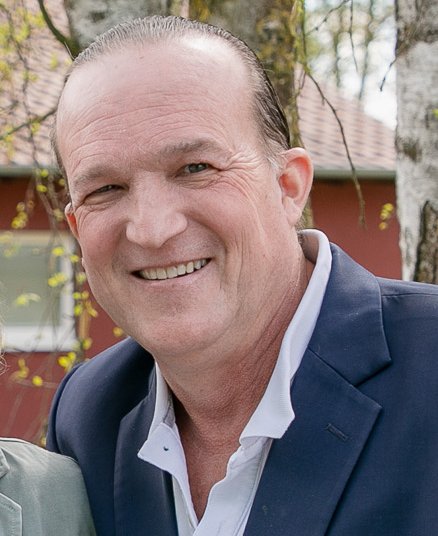
Dr. Raphael Nagel - former pupil and turnaround investor
The Schloss-Schule taught me a lot. Above all, I learned through the interaction with each other and that many things were exemplified and naturally implemented in everyday life.
For me, this includes, for example, the ability to think independently. Through exchanges and discussions at eye level, we were taken seriously as students back then, we were able to think our thoughts through to the end and learned the ability to reflect and listen to other opinions, to take them seriously and to include other arguments in our own opinions. There was no stubborn black-and-white thinking here.
To our alumni portraits
The community - the boarding school as a social training ground
The boarding school is (also) a social training ground and consists of a diverse community. Our children and young people generally live in age- and gender-segregated groups because we deliberately do not want to be an alternative to the family. This gives adolescents in puberty in particular the opportunity to unfold and develop their personality in different social structures than in the family.
At boarding school, it is the person next door who insists that the music is turned down, not the mother - and this friend may have to be provided with food the next day because he/she is ill.
It is important to us that the young people do not have to take social learning courses in the morning, but that they learn to look beyond themselves in everyday life at the boarding school, that they learn to perceive and accept others and to stand up for them.
The group evening at the boarding school is particularly important for the cohesion of the group. Every two weeks each group does something special with their teacher on Friday evening: climbing, cooking, karting, etc.
Special highlights for us are the festive dinners and the parties before the vacations. Good dress and good manners are required at the formal dinners, but the parties are also a time for celebrating and dancing.
Our boarding school does all this and more!
A boarding school can complement and enrich the development of children and young people in a special way, it can offer them more experiences and relationships and broaden their view of the world and the possibilities for action in it at an early age.
In summary, our pedagogy is a pedagogy of responsibility and encouragement as well as an education for happiness.
General background information: The boarding school as an alternative to the regular school and care system
Old traditions with new conceptsMany boarding schools rightly continue to stand by their tradition, often dating back over 100 years, associated with values such as cohesion and discipline as well as adherence to rules of social interaction. However, a change in boarding schools towards a modern approach to today's society, towards an orientation towards a cosmopolitan, often reform-oriented style of education and upbringing, means that boarding schools today appear in a completely new light.
Important to know - boarding schools have changed a lot:
From elite squad to specialist training providerIn their beginnings in the 19th century, boarding schools served as educational institutions outside the home, usually affiliated with monasteries, royal courts or universities. The pupils were to be prepared for their later, elite leadership roles. In the course of the Enlightenment and the development of cities in the 20th century, boarding schools began to open up to the less well-off middle class. The first currents of reform pedagogy, which were directed against the authoritarian drill at schools and boarding schools, also found their way into the education system at this time. The Schloss-Schule Kirchberg boarding school was one of the boarding schools that had already committed itself to a reformist educational approach at the time of its foundation over 100 years ago: the central guiding principle was self-responsible learning, also geared towards personal skills, without pure pressure to perform.
At the latest with the progressive expansion of the state school system in the 1960s, boarding schools in Germany also attempted to occupy their own niche and differentiate themselves. The path often led away from the formerly elitist educational cadres towards cosmopolitan educational institutions with an individual character and their own concepts. A development that has been increasingly appreciated again, especially in recent years.
Key advantages of boarding schools: small classes and new learning models
Boarding schools represent a promising option in the education system for what cannot be achieved sufficiently at mainstream schools, where large classes and fixed curricula simply reach their limits. With small classes that enable individual support and encouragement for each pupil, modern learning concepts and a certain amount of freedom in the curriculum, a move to a boarding school is increasingly being considered again. In particular, reform-oriented boarding schools such as Schloss-Schule Kirchberg appear to be at least as up-to-date today as they were in the past.
The core competence of the boarding schools:
Individual promotion of potentialAs an alternative to all-day mainstream schools or private schools, one factor in particular often speaks in favor of boarding schools: the combination of school and home life at boarding schools makes it possible to get to know and assess the strengths and weaknesses of each individual pupil better. The associated targeted and more intensive promotion of the potential of boarding school students is a key aspect that distinguishes boarding schools and is appreciated by both parents and students. This means that work is done both to minimize the weaknesses of individual pupils and to highlight and individually promote their strengths and talents.
But there are other advantages that make it worth taking a closer look at the boarding school alternative.
Further advantages of the boarding schools:
From personal responsibility to the networkBoarding schools put pupils at the center
Theindividual support for each boarding school pupil is particularly intensified by the fact that most boarding schools attach great importance to teaching in small classes. This gives the teachers more time to adequately look after the pupils entrusted to them.
Parents also know that their boarding school children are well looked after when it comes to afternoon extracurricular learning sessions and homework supervision. This is because it is not unskilled supervisors, but teachers, often the teachers themselves, who assist the boarding school pupils with the preparation and preparation of the subject matter.
Boarding schools offer scope for specific skills development
The curriculum, which even at private boarding schools must be based on the curriculum of the respective federal state, often leaves more leeway at boarding schools thanks to restructured teaching models. This means that there is room for teaching skills that go beyond the prescribed curriculum. In other words, an extended transfer of knowledge in which boarding school students can often have a say in what exactly they want to study in depth. In this way, the individual talents of each pupil are further strengthened in the school environment.
Practical offers in boarding school leisure time
The individual abilities and inclinations of pupils at boarding schools can also be optimally developed in their free time. Be it in the arts, artistic, technical, sporting or other areas - boarding schools in particular cover a wide range of interests, which are also practically promoted in leisure time.
Boarding schools promote social interaction
As far as the social skills of boarding school students are concerned, it is not only the case that they have to follow rules, but they also experience and learn the meaning of rules and their observance in a community. After all, a boarding school community, like any other human community, can only function if each individual at the boarding school adheres to guidelines - and deals with them responsibly.
Social interaction is also based on helping others in a community - and receiving help in return. For example, younger boarding school students are often provided with tutors in the form of older students who they can turn to at any time with questions - even outside of the subject matter. A balanced give and take that boarding school students experience time and again.
Boarding school students with more personal responsibility and social skills
Boarding school students learn to integrate themselves into a society or group and to find their own part in it on a daily basis. They take responsibility for their own actions and their role in the boarding school community and are taught independence almost as a side effect. The best prerequisite for becoming a self-confident, good "team player" with high social skills in later adult life.
Boarding school network - for life
Due to the domestic community, boarding schools create friendships and social networks that often last a lifetime. These networks and the often intensive contact with former students also offer many opportunities professionally after graduation. For example, it can make it easier for graduates to enter vocational training or even a company.
In many respects, boarding schools open up educational and life opportunities - even beyond the school years. But how do you find the boarding school that really suits your child? What criteria need to be considered in order to find a good, suitable boarding school?
Boarding schools in Germany – an overview for parents
Not all boarding schools are alikeGermany has numerous boarding schools – and they differ considerably: in their educational approach, the types of school and qualifications they offer, their size and the activities beyond the classroom. Some have their own focus, for example on sport – at Schloss-Schule, these include our basketball boarding school and our equestrian programme. It is therefore worth taking a close look at which boarding school suits your child.
Schloss-Schule Kirchberg is one of the boarding schools in Germany with a long tradition: it was founded in 1914 and still follows a reform-educational approach that is open to all worldviews. The school is a founding member of the boarding school association “Die Internate Vereinigung”, the successor organisation to the Vereinigung Deutscher Landerziehungsheime, and a member of the Association of German Private Schools (VdP). It is located in Kirchberg an der Jagst in the rural Hohenlohe region – find out more on our page about our boarding school in Baden-Württemberg.
Schloss-Schule is a state-recognised grammar school with boarding and a state-recognised Aufbaugymnasium. Boarding pupils can also attend the public primary schools, Werkrealschulen, Hauptschulen and secondary schools in the area with which the school cooperates; vocational school tracks are also possible.
Boarding schools are generally not free of charge. Our page on school and boarding fees gives you a transparent overview. For further guidance, read our article on what parents should look out for when choosing a boarding school in Germany.
According to the Association of German Private Schools, there are currently around 400 to 450 private boarding schools in the German boarding school market. There are also a number of state boarding schools, but these are far fewer in number than privately-run boarding schools. The private boarding schools in particular try to differentiate themselves from the competition by having a clear focus. Be it through a focus on the arts or sports, through the teaching of denominational and social values or through reform pedagogical learning and teaching strategies for the individual support of boarding school students. In order to really find the right boarding school, the most important questions should be clarified and answered according to the exclusion principle.
From an educational reform perspective, for example, Schloss-Schule Kirchberg focuses on teaching its pupils to take responsibility for their own learning and actions and creating concepts that allow scope in the curriculum for the development of individual talents.
The Schloss-Schule boarding school focuses on the natural sciences as well as culture and theater. And: foreign languages and internationality play a central role.
Students at Schloss-Schule Kirchberg who choose the grammar school route have to take English as their first foreign language and optionally French/Latin from Year 6. The Schloss-Schule also offers secondary school graduates the opportunity to obtain a vocational baccalaureate diploma or a general higher education entrance qualification. Last but not least, boarding school children can also attend the neighboring secondary school (Hauptschule, Werkrealschule or Realschule) and obtain a qualified qualification in this way too.
At the Schloss-Schule Kirchberg boarding school, the focus is on the individual. For this reason, fortnightly weekend trips home are the rule, but there is nothing to stop students spending regular weekends with their families. This is made easier by the Schloss-Schule's good connections to the nearby highway, regular train connections from Crailsheim and the school's own shuttle service to and from the train station.
As diverse as the pupils are, the Schloss-Schule offers a wide range of activities for their time off school. On the grounds, in the surrounding nature or within the working groups (AGs), there are numerous sporting, artistic-creative, artistic or craft leisure activities available.
As part of the fixed learning and working hours, boarding students at the Schloss-Schule always have a teacher-educator at their side to help them with school-related questions, and tutoring is also available. In addition, the children are supervised by social pedagogues who take on the educational role. This means that the pupils always have a contact person for all their concerns, both at school and in their private lives.
In the boarding school regulations, which are part of the boarding school contract, each boarding school defines its own specific set of rules. At Schloss-Schule Kirchberg, the main areas such as going out and working hours or media and smartphone consumption are graded according to age groups. A strict media ban, for example, is deliberately not anchored at the Schloss-Schule.
At the Schloss-Schule boarding school, internationality is experienced on a daily basis - even without participating in the student exchange programs that exist with France, England and Poland. Students of different nationalities, for example from China, the USA or Spain, always come to Kirchberg for one or more years abroad - and enrich the everyday lives of their German classmates. Some lessons in all grades are also taught in a foreign language by native-speaking teachers.
Important when deciding on a boarding school:
Never without getting to know each other personallyFor all those boarding schools that are finally shortlisted, there is one thing above all else to consider: The boarding schools should always be inspected in person. After all, it is above all the future boarding school students who must have a good feeling about the boarding school they have chosen.
During an on-site visit and meeting, any questions that are still open or that may still arise can be answered directly by parents and students. When arranging a personal appointment, it is always helpful to ask to speak to current boarding school students in private. The boarding schools are also sure to respond to requests to get in touch with other boarding school parents to discuss their experiences of boarding school.
Schloss-Schule Kirchberg is happy to offer this service: Simply talk to us about this when contacting us or arranging a viewing appointment.