Our representatives at the school
Our Schloss-Schule Kirchberg has a long history as an educational reform school, in the course of which it has been developing, changing and even reinventing itself pedagogically for over 100 years - also under the influence of social, political and economic changes.
As part of this constant change, our teachers are integrated into teams at all levels of the school system in order to be able to contribute effectively through joint and collaborative action: Class teams, coordinator teams, subject teams.
The group of representatives consists of educators who are primarily responsible for educational developments at the school or topics such as general counseling, addiction prevention, autism, and school anxiety.
Our representative for autism
Symptoms that can occur with an autism spectrum disorder include difficulties in social communication, social interaction and social understanding.
When it comes to learning in particular, pupils with an autism spectrum disorder process information differently and view problems from a different perspective than their peers. Unusual behavior and ways of thinking therefore require appropriate handling on the part of the teacher in order to prevent complications.
Dealing with autistic people requires a great deal of understanding on the part of others; understanding comes from understanding!
We have therefore taken on this special topic in order to be able to offer support to affected children and their parents at our school. To this end, colleagues at our school are training to become experts in autism.
The aim of this initiative is to ensure that affected children feel comfortable and accepted at Schloss-Schule Kirchberg and are able to learn well.
We work with a great deal of patience and empathy to familiarize our pupils and colleagues with the concept of autism spectrum disorders and to sensitize them to the fact that a school day can be a complete sensory overload for those affected.
The small classes at our school offer ideal conditions for minimizing stimuli in the classroom and promoting individual skills. Together, the staff can initiate the necessary measures that your child needs.

Our representative for ADHD
Dear students, dear parents,
My name is Inga Haybach-Reitz and I have been working as an ADHD representative, multimedia consultant and teacher for Spanish and English at the Schloss-Schule since the 2023/24 school year.
ADHD stands for attention deficit hyperactivity disorder, a neurological disorder that can severely impair social interaction and, in particular, the learning behavior and learning success of those affected. However, ADHD can also be like a superpower if those affected have a strong interest in a subject or particularly enjoy an activity. This is when they activate their ability to hyperfocus, a particularly intense phase of concentration that can have an extremely stimulating effect. Basically, however, and this is what makes it so difficult for those affected at school and when learning, the deficit in attention is at the forefront of the disorder, which is caused and intensified by the other core symptoms of hyperactivity, motor restlessness and impulsivity. In addition, external stimuli can hardly be blocked out. These include not only audiovisual stimuli, but also olfactory and haptic stimuli such as intense odors or scratchy clothing. It becomes extremely difficult to concentrate and memorize new learning content and as a result, deficits in the learning material build up, which in the long term lead to those affected performing worse and worse. This eats away at their self-esteem, the level of suffering increases and, apart from the fact that those affected are perceived as disruptive, they themselves think that something is wrong with them.
As an ADHD representative, I want to help affected pupils to better understand their disorder and try out strategies to make everyday life in the classroom and learning at home easier for them. As a contact person, I am not only available to the children, but also to the teaching staff and you, dear parents.

Our guidance counselor at the Schloss-Schule
When pupils have problems at school, good advice is often expensive. Pupils and parents suffer from the tense situation and the people involved often see no way out of their difficulties.
"In every difficulty lives the possibility!" Albert Einstein once said. The school counseling provided by Andrea Scheibel builds on this foundation. Pupils from all grades can make use of it, as can their parents.
School counseling is available for a wide range of problems. These include, for example, learning and performance problems, conflicts at school, or problems in the personal environment or general overload.
Should such problems arise, this service is available at any time. All information is treated confidentially. The counseling teacher is bound to secrecy! This support is free of charge and no one is forced to visit the counselor.
Above all, this support should give you pupils the feeling that you have someone outside your family who can help you in difficult situations. You should feel comfortable and go your own way at this school. If you can think clearly, you can learn more easily and have much more fun.
The counseling process at the Schloss-Schule
If you notice a problem and want to solve it, you can contact Andrea Scheibel in person, by phone or e-mail and an appointment will be arranged.
At the first meeting, the problem is explained and the next steps are considered and planned together. If the problem requires it, other parties involved will be consulted with the consent of the person seeking advice. This guarantees that the problem is tackled comprehensively!
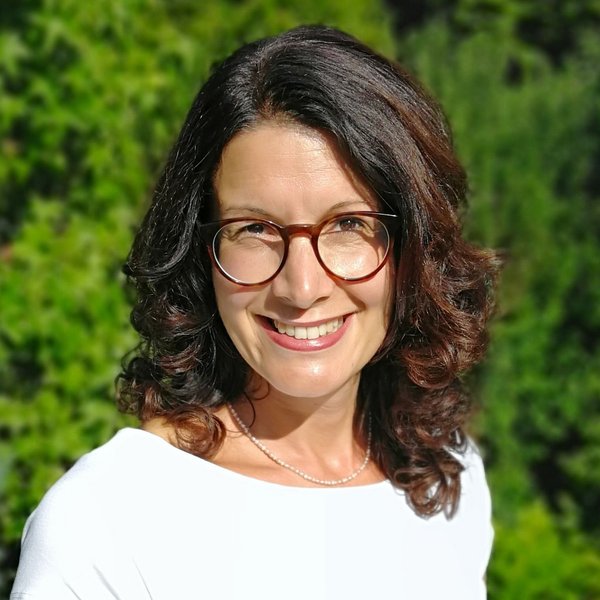
Our representative for school anxiety at the Schloss-Schule
My name is Carina Rudolph and I teach English, geography and social studies at Schloss-Schule Kirchberg. I am also an representative in school anxiety.
School anxiety is not simply a fear of school, but has two possible roots. It can be divided into performance anxiety and social anxiety.
In the case of pronounced performance anxiety, the pupil is afraid of not meeting the performance requirements and is under a lot of stress. Social anxiety is the fear of social interaction that goes hand in hand with school.
Such fears have an enormous impact on mental health and can also have psychosomatic consequences. For example: Your child often has a stomach ache or headache before an exam, before school in general: you repeatedly report your child sick. Of course, we teachers and educators notice this. The causes are not always clear; many factors and reasons intertwine.
School anxiety often leads to truancy, but this does not make the anxiety disappear. It is important to recognize the symptoms at an early stage and to get in touch with the pupils, their parents and teachers. This is the only way to address the problem individually and get to the root cause of the anxiety. I want to find the best possible solution for every pupil. In some cases of severe anxiety disorder, it makes sense to involve extracurricular support institutions.
At Schloss-Schule Kirchberg, we are very fortunate to be able to maintain very close contact with our pupils. Thanks to our small classes, we always have the best possible overview and can perceive the children and young people individually.
I have prepared myself for this challenge through further training at the University of Mainz. The entire team of representatives is in regular contact. Working together with colleagues and our head teacher helps me to address the individual problems of the pupils and take preventative measures.
My intention as an representative in school anxiety is to enable affected children and young people to attend school again without fear. School anxiety affects the school environment and must also be reduced in this environment. With contact, cooperation, confrontation and coordination, every pupil can be helped to find their way back into everyday school life.
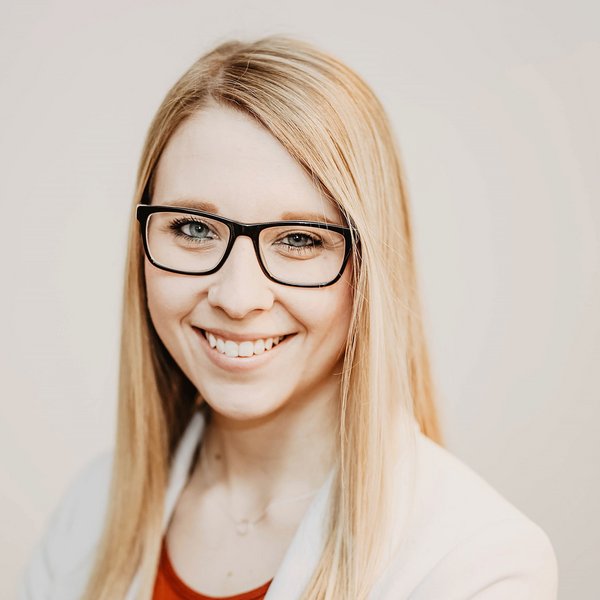
Our representative for addiction prevention at the Schloss-Schule
My name is Lydia Kurz and I teach biology/BNT, mathematics and geography. I am also an representative in addiction prevention at Schloss-Schule Kirchberg. Addiction and its prevention are issues that can also occur in the school environment, usually undetected for a long time.
School is an important social hotspot for your children. This is where they come into contact with their peers and spend a lot of time. The boundaries between school and private life often become blurred, with the school and all the people involved playing a crucial role in children's development.
In order to understand addiction, I would like to illustrate how multifaceted addiction can be. We are not only dealing with legal drugs such as nicotine and alcohol or illegal drugs, which are primarily associated with addiction. But addiction in adolescence and school has very diverse profiles and often affects entire groups. One person might start smoking, another discovers a computer game, a third doesn't think she's thin enough and competes with others to see who can eat the least. Once this happens among friends, it can quickly get out of hand and cause serious damage. Different types of addiction can be listed at will, but the consequences are always the same and usually a vicious circle for the addict.
This is precisely why I want to help the pupils at the Schloss-Schule as a preventative measure. I am in contact with other experts in the district and with our guidance counselor Andrea Scheibel, who is also a teacher at Schloss-Schule Kirchberg. Together, we try to recognize all forms of addiction at our secondary school and offer ourselves as a point of contact for the pupils.
I also incorporate the topic into my lessons in order to provide information about the psychological and physiological processes. Of course, I support all my colleagues in this regard. First and foremost, addiction should not only be countered with harsh sanctions, but should be perceived as a disease, which requires pedagogical empathy and trust.
Pupils at Schloss-Schule Kirchberg, as well as their parents, can turn to me if they need help or advice. I have set up a fixed consultation hour for this purpose. Otherwise, you can contact me at any time by e-mail or, of course, speak to me directly and in person.
I hope that, together with you, I can help the affected pupils and end the vicious circle.
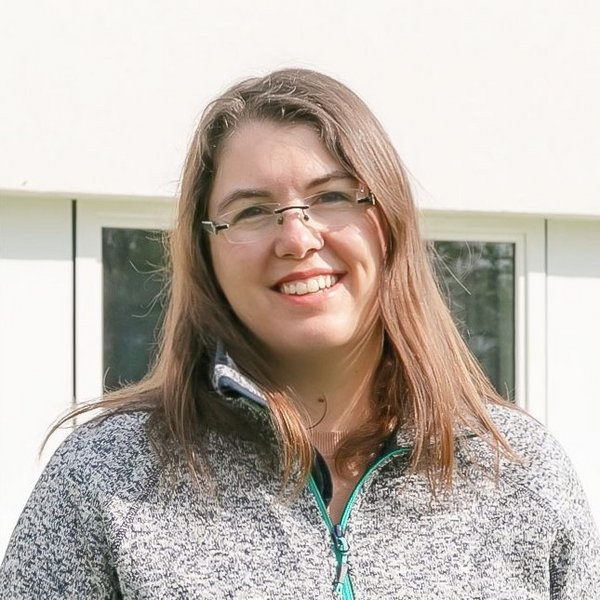
Our representative for exercise & health
My name is Meike Bohn and I teach physical education. I am also an representative in the area of "physical activity and health" at Schloss-Schule Kirchberg.
The school plays a large and important role in promoting physical activity.
Our pupils spend a large part of their childhood at Schloss-Schule Kirchberg, which is why the promotion of physical activity can be optimally implemented in this setting.
Through various exercise activities in the classrooms (physical activity lessons), in the playground or in the sports halls, our pupils get moving and thus strengthen their health.
The physical activity lessons consist of small movement tasks or movement games on the subject of coordination, relaxation or strengthening the muscles, which the pupils carry out together with the teacher during short breaks in the lessons.
In addition, pupils have the opportunity to practise and learn at height-adjustable desks, which allows them to alternate between different learning positions. This promotes the maintenance of physical and mental health.
Because exercise is much more than just sport!
Movement has been proven to lead to a state of relaxation, increases the ability to concentrate and absorb information, strengthens physical and mental well-being and also promotes social skills.
The Schloss-Schule Kirchberg promotes sustainable physical activity through various activities, such as active breaks, active lessons, action days on the subject of health and exercise, the exercise mentor program and participation in nationwide health promotion programs.
If you move, you get things moving!