Why should you choose Spanish?
Spanish is the fourth most widely spoken language in the world and is considered a native or official language in more than 20 countries. Spanish is spoken as an official language in important international institutions.
Furthermore, Spain and Latin America are not only important trading partners for Germany, but also culturally important and are becoming increasingly popular.
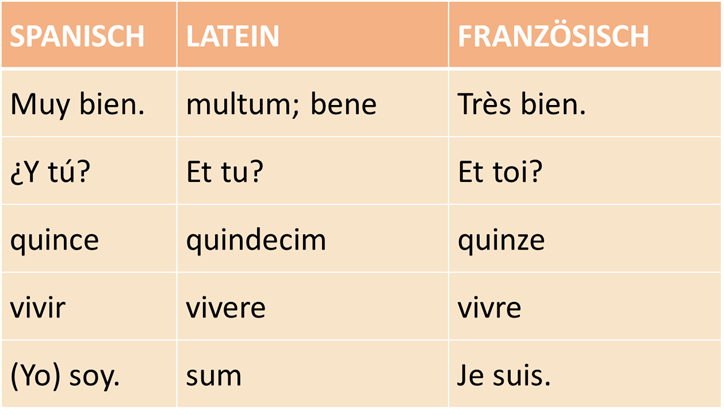
Finally, it is possible to draw on previous foreign language skills and quickly learn the new foreign language. The Spanish language is sure to pave the way later in your studies and career and build bridges - both professionally and privately.
Spanish as a late foreign language from year 10 onwards
Anyone who would like to learn Spanish in the upper school should also have the opportunity to do so. As a late-starting foreign language, Spanish is offered as a 2-hour subject in year 10 and as a regular 2-hour subject in the course level. The focus here is on the rapid acquisition of communicative skills for everyday situations, while grammar is reduced to the bare essentials. To this end, the textbook ¡Adelante! Curso esencial by Klett, which is tailored precisely to these goals.
What can you do after six months of Spanish?
- ask other people for their name, age, origin and contact details
- say how you are doing and ask how other people are feeling
- talk about everyday school life, the daily routine and leisure activities
- formulate plans for the future
- understand simple and longer texts globally
What do you learn when? (profile subject from grade 8)
Year 8:
Playful introduction to the Spanish language. Simple texts are read in the present and future tenses and first conversations in the foreign language are practiced.
Year 9:
The first past tenses are learned and the texts become more demanding.
Year 10:
Almost all Spanish grammar is mastered by the end of the school year. This enables students to express themselves competently and in a differentiated way in Spanish in almost all situations. It is also possible to take the DELE exam at the Schloss-Schule.
What do you learn when? (Spanish starting late from grade 10)
Year 10
Playful introduction to the Spanish language. You can talk about yourself, your family and your surroundings.
Year 11
You learn to talk about your free time, your daily routine and your school day. The subject of food is also covered. A highlight is the joint preparation of Spanish specialties such as gazpacho and tortilla de patatas (a Spanish potato omelette), with Spanish being spoken throughout the entire "cooking lesson".
Year 12
In the final year, you not only learn how to report on past events, but also how to write your CV in Spanish, write a cover letter and read Spanish job advertisements. Afterwards, nothing stands in the way of applying for an internship or a voluntary social/ecological year in a Spanish-speaking country! In line with the question "Abi, and now?", you will also learn how to talk about your future, express your wishes and opportunities and express your opinion on various topics in a differentiated way.
After year 12, you also have the opportunity to take the DELE exam at the Schloss-Schule.