ESD as a cross-sectional task
Our school focuses on the holistic development of students, which goes beyond purely academic aspects, and encourages them to take responsibility for the environment and society at an early age. This holistic approach is reflected not only in the curriculum and teaching, but also in extracurricular activities, partnerships with businesses and organizations, and the sustainable design of everyday school life.
We pride ourselves on creating an environment where sustainability is not only taught, but actively practiced. From our educational curricula to our daily habits to our extracurricular activities, we strive to raise awareness of the pressing environmental and social challenges of our time and take concrete action to improve our world.
ESD in the overall pedagogical concept
Education plan and lesson design
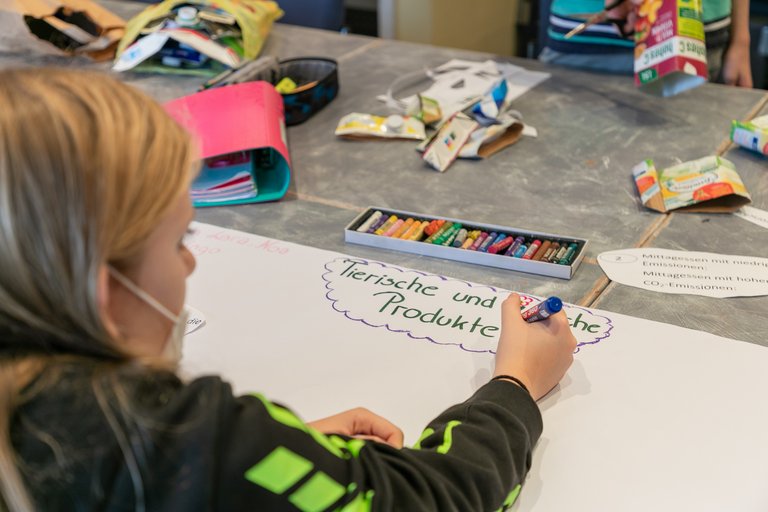
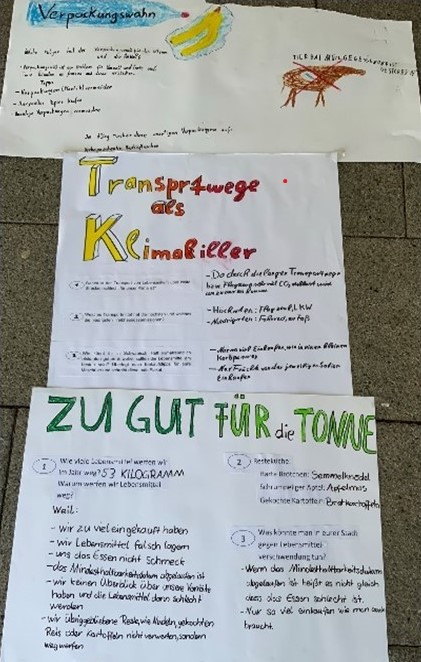
ESD is integrated into the education plan as a cross-cutting theme to ensure that all pupils are regularly exposed to the principles of sustainability in various subjects. Teachers can incorporate ESD into their lessons by developing hands-on, action-oriented and project-based learning activities that encourage students to develop sustainable ways of thinking and acting.
Extracurricular activities and projects
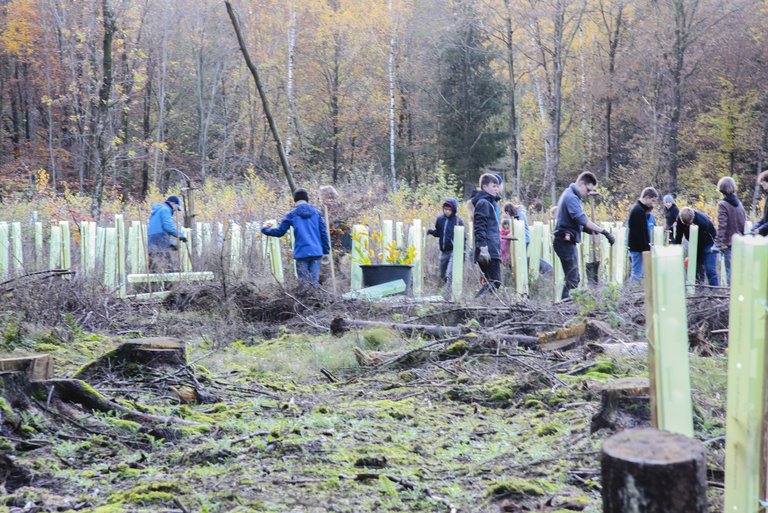
Our school initiates and supports extracurricular activities and projects that promote awareness of sustainability. These include environmental projects, waste collection campaigns, excursions to sustainable companies or workshops on topics such as renewable energy or organic farming.
School partnerships and networks
Our school maintains partnerships with companies, environmental organizations and other schools in order to carry out joint projects and initiatives in the field of ESD. By sharing resources, ideas and best practice examples, we can learn from each other and strengthen our sustainability efforts.
School organization and infrastructure
Our school integrates sustainable practices into its organizational processes and infrastructure. This includes measures such as reducing energy and water consumption, promoting cycling or public transport for pupils' journeys to school, introducing recycling programs and using renewable and regenerative energies. Our sponsor, the Schloss-Schule Kirchberg Foundation, plays a central role in this.
Participation and co-determination
At our school, ESD promotes the participation and co-determination of pupils by involving them in decision-making processes that affect our school and its surroundings. This helps to strengthen our pupils' sense of responsibility and make them active shapers of a sustainable future.
Anchoring in other school programs
At Schloss-Schule Kirchberg an der Jagst, we pursue a holistic approach to education for sustainable development (ESD), which is reflected not only in regular lessons but also in other school activities. Through a variety of initiatives and programs, pupils are encouraged to develop an awareness of environmental and sustainability issues and to actively work towards a sustainable future.
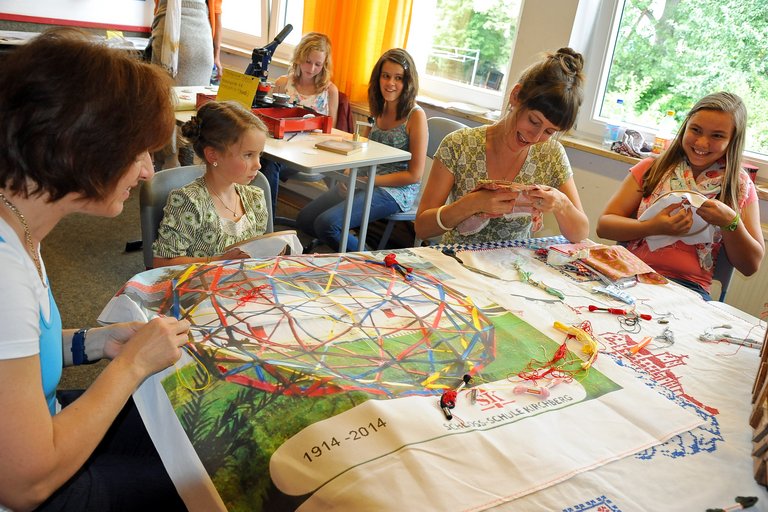
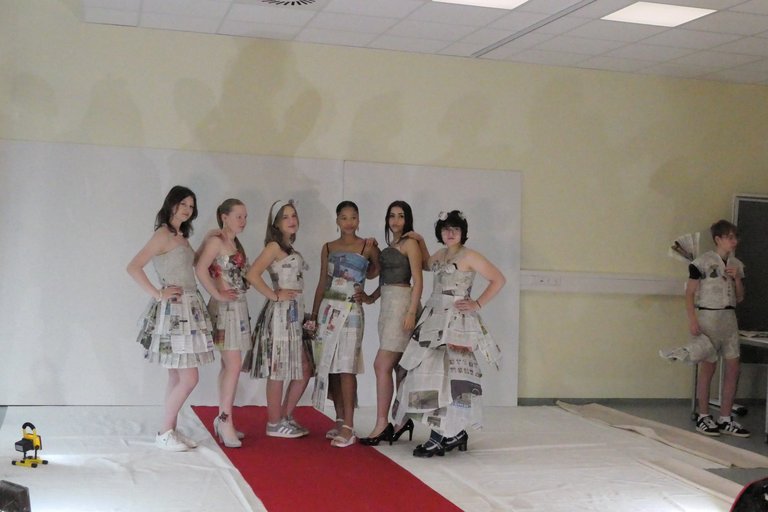
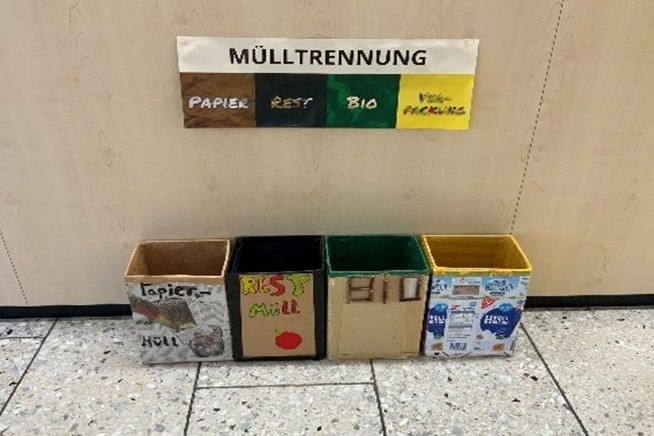
A central element is the so-called "SKIL" program (Schloss-Schule Kirchberg - Individual Learning), which includes various courses and activities that deal specifically with sustainable topics. Here, pupils in grades 5 to 7 are taught how to upcycle in workshops with a project character in cross-grade courses, learn how to produce waste separation systems and create creative clothing items from recycled materials. These hands-on activities enable pupils to deepen their understanding of sustainability and acquire concrete skills in dealing with resources.
We also place a strong focus on promoting a healthy lifestyle and sustainable nutrition. The school's own kitchen cooks with regional and fair trade products, and there is a daily vegetarian meal as well as regular meat-free days. Through awareness campaigns and practical cooking courses in craft and design lessons, pupils are encouraged to make conscious choices when buying and preparing food. The seasonal and regional aspect of food preparation and the convincingly good taste of these processed raw materials are important to us here.
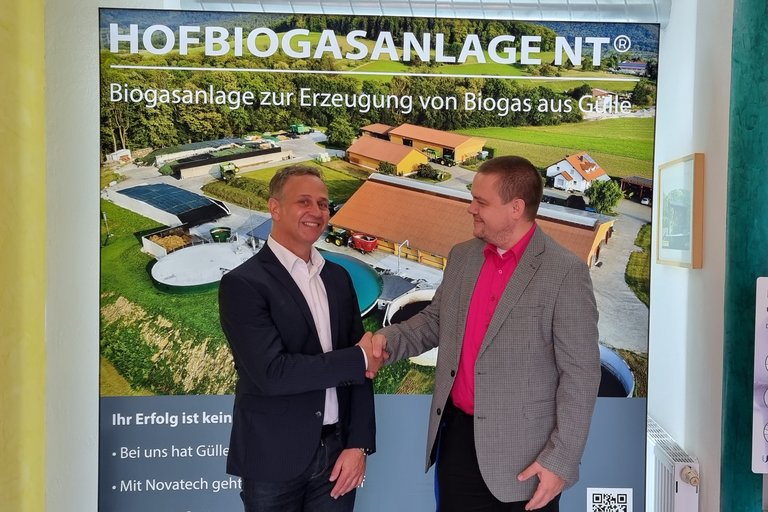
Another highlight for us is our close cooperation with local organizations and companies that are committed to environmental protection and nature conservation. For example, the Schloss-Schule supports the local NABU with its own working group. This gives pupils the opportunity to actively participate in nature conservation projects and deepen their knowledge of local nature. The school also works with a farmer who produces biogas and keeps farm animals in a species-appropriate manner. These partnerships offer pupils the opportunity to experience sustainable practices in practice and actively engage in environmental protection projects. These partnerships raise awareness of ecological issues and help to protect the environment.
Several nesting boxes for birds have been installed on the Schloss-Schule school grounds and are maintained by the NABU AG. This not only promotes bird diversity, but also raises awareness for the protection of local wildlife. There is also a small pond on the site, which is also a natural biotope for flora and fauna. This pond provides a habitat for various plant and animal species and serves as a place to learn about ecological relationships.
The Schloss-Schule attaches great importance to the regionality and sustainability of its food supply. Most of the food on offer in the school cafeteria and canteen comes exclusively from the region, from a radius of less than 30 km.
Importance of the school authority in the area of ESD
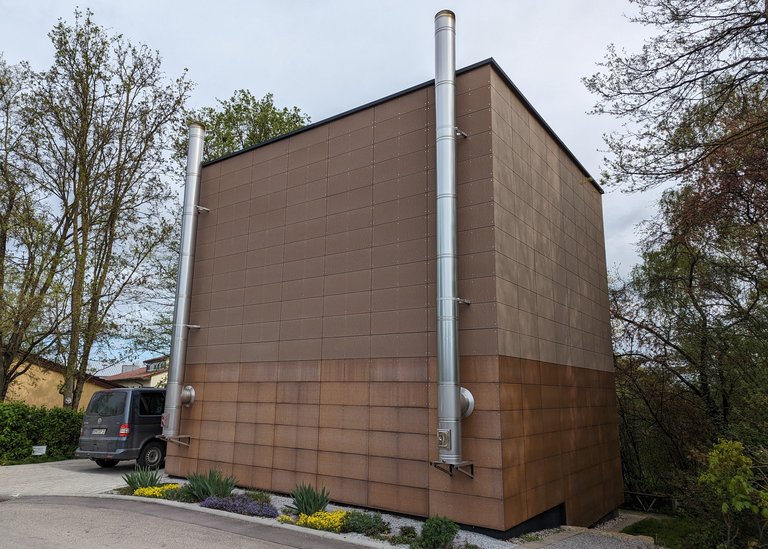
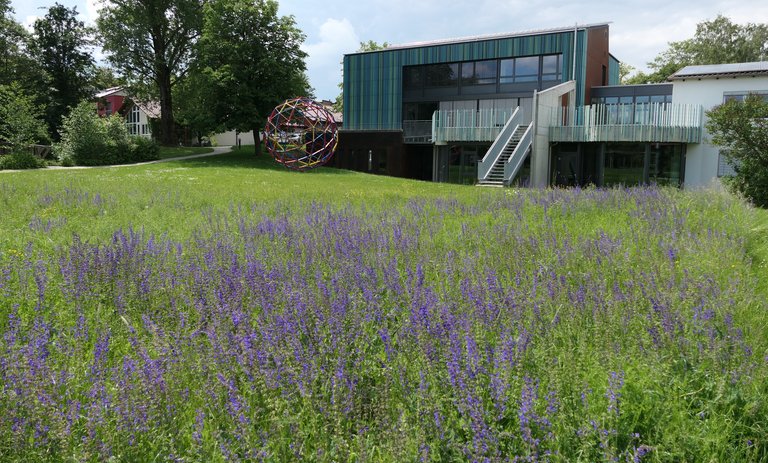
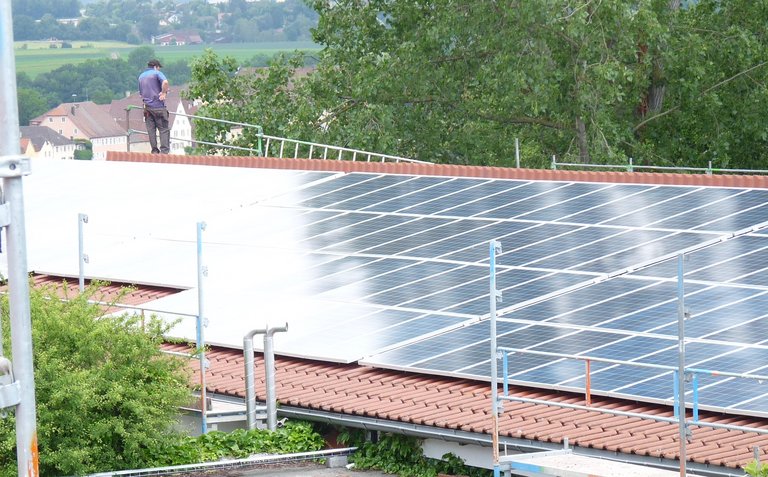
As the school's governing body, the Schloss-Schul-Stiftung is actively committed to sustainable development, which is not only visible in the educational concept, but also in construction measures and partnerships with the local economy. The Schloss-Schul-Stiftung has made a number of investments to make the educational establishment ecologically and economically sustainable. One important measure is the conversion of the heating systems to environmentally friendly alternatives. All buildings on the school and boarding school grounds, as well as adjacent detached houses and apartment buildings, are supplied by a pellet heating system. In addition, a geothermal heat pump was installed in the administration building. In order to optimize the heat supply in transitional periods and reduce overall costs, a combined heat and power unit (CHP) with biogas operation was purchased. Sustainable solutions were also implemented in the area of ventilation systems. Decentralized ventilation systems were installed in four classrooms, and controlled ventilation systems with heat recovery were implemented in the administration building and in the learning and culture workshop. These measures not only contribute to improved air quality in the rooms, but also to the energy efficiency of the buildings. The integration of renewable energies also plays a key role in the Schloss-Schul-Stiftung's sustainability strategy. A photovoltaic system has been installed, which produces around 160,000 kWh of electricity per year. From summer 2024, a biogas-powered CHP plant will also supply around 140,000 kWh of electricity per year. The school also purchases 100% green electricity from GrünStrom Kirchberg. In the area of water use and conservation, the Schloss-Schul-Stiftung invested in a cistern with a volume of 10 cbm for flushing toilets in the learning and culture workshop.
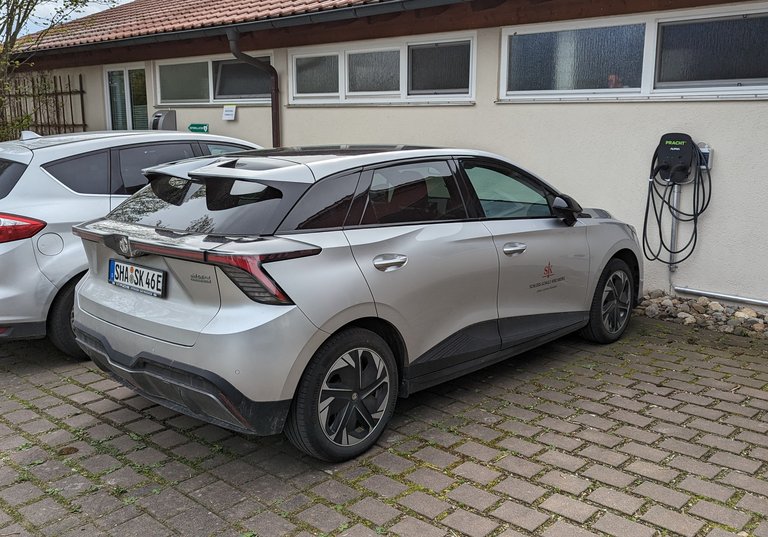
In addition to infrastructural measures, the school authority is also promoting electromobility - an MG electric car was purchased.
In addition, a charging infrastructure in the form of a wallbox has been installed to give employees the opportunity to charge their cars. The Schloss-Schul-Stiftung is not only pursuing ecological goals, but is also committed to creating green outdoor areas. Corresponding measures are being implemented around the new building. The foundation has also acquired the "Brandeiche" natural monument, an oak tree that is over 100 years old. The oak is maintained in accordance with the requirements for natural monuments. The realization of these sustainable measures was made possible by cooperation between the school authorities and surrounding companies. These partnerships made it possible to implement the structural measures promptly, cost-effectively and regionally. Cooperation with regional companies not only strengthens the local economy, but also promotes solidarity with the community.