Teachers also have a (legal) duty
Homework - a topic that usually causes a muffled murmur in the classroom at the end of the school day. But it is also a topic that, according to surveys, is considered useful and necessary by both teachers and the majority of parents (and even the pupils themselves).
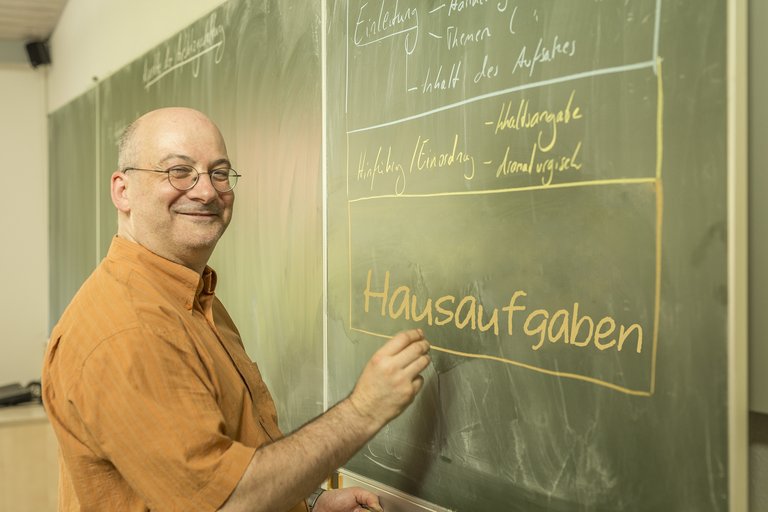
But when are complaints from pupils or parents really justified and when are teachers actually overstepping boundaries?
"In purely legal terms, when the homework rules from the school laws of the federal states or the regulations from the general teacher or school conference are regularly or excessively exhausted by colleagues," says Alexander Franz, head of teaching at Schloss-Schule Kirchberg. The state or school-specific guidelines therefore also place teachers under obligation.
As pupils should be given enough freedom for extracurricular activities and the acquisition of other skills, more and more schools and federal states are setting time limits for completing homework - at an average learning pace. In North Rhine-Westphalia, the federal state with the highest number of pupils, these were even made binding by circular decree in 2015; similarly specific time limits can also be found in other federal states or schools:
- Class 1 and 2: max. 30 minutes
- Class 3 and 4: max. 45 minutes
- Class 5 to 7: max. 60 minutes
- Class 8 to 10: max. 75 minutes
"At our school, we teachers keep class diaries in which we enter the homework so that colleagues know roughly how much time they can still spend on their homework," says Alexander Franz, explaining the procedure at his school in Baden-Württemberg.
Homework taboo over the weekend or vacation?
Homework that does not comply with the legal regulations could theoretically not be sanctioned by teachers or the school if it is not completed. This also applies to the regulations for homework over weekends, vacations, public holidays or on days with afternoon lessons. Although there are also differences here from state to state or school to school, the cross-section usually stipulates that no homework is set for these times. The Bavarian school law, for example, states that "Sundays, public holidays and vacations are to be kept free of homework." In other places, Saturdays are also included. In contrast, voluntary consolidation and revision tasks, e.g. in preparation for a school assignment over the vacations, are not regulated.
"We decided in the conference to really keep the free periods free for pupils to relax without compulsory homework. However, homework over the weekend is permitted, as pupils can still complete it on Friday afternoons, which do not count as a weekend - but then only to a reasonable extent," explains Dr. Eva Borchers from Schloss-Schule Kirchberg.
Homework is defined as "appropriate" in terms of type and design across all countries as follows: Homework should...
- deepen and apply the subject matter,
- be related to the lessons,
- (be able to) be completed without extracurricular help.
And: Homework should also be included in lessons and checked on a random basis, "which on the one hand creates a desired feedback culture and on the other hand has a motivational effect on pupils. Otherwise they ask themselves why they are doing homework if nobody looks at it," emphasizes Eva Borchers, a former boarding school director and retired teacher.
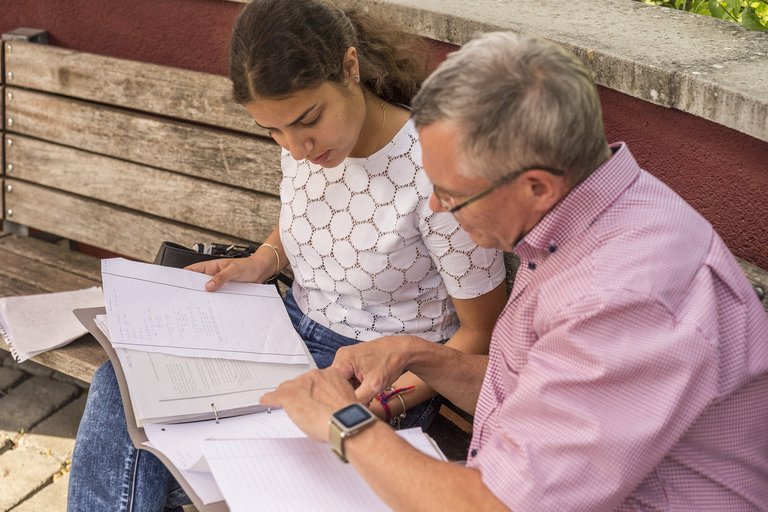
However, some school laws and regulations do not allow homework to be given as a punishment or for disciplinary purposes or for grading. This is because grades can only be given for objective performance. Homework, on the other hand, is work that has been completed under completely different influences at home and not under the supervision of a teacher or school. "However, it is permitted to ask about the homework material and homework can also be taken into account when assessing performance if this was announced at the beginning of the school year when grades were given," adds Alexander Franz.
However, if grades are on the line and the teacher's pedagogical homework assessment would even lead to a lower report card grade, caution is advised according to Alexander Franz: "If it comes down to a complaint from parents or students or even a legal decision, teachers usually get the short end of the stick according to previous rulings." The teacher therefore clearly recommends: "Seek a conversation with parents and pupils as soon as a disagreement arises, then it won't escalate in the first place."
The same applies if parents exempt their children from homework due to excessive demands, which is not legally possible, as only the school can release them from the obligation to do homework. "Nevertheless, we experience this time and again," says Alexander Franz, "but we deal with it diplomatically in agreement with the teaching staff and seek a discussion to find out the background."