Tried and tested tips for more self-discipline when learning at home
And every day the groundhog greets the groundhog - often to the chagrin of the whole family when it comes to homework. But what can you do when homework, studying and school preparations at home just don't work out and escalations occur again and again?
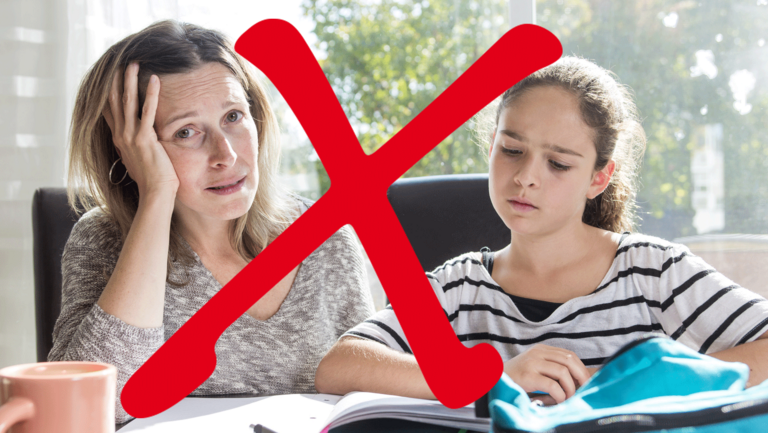
"Towards more self-discipline" is the credo of learning practice expert Melanie Wies. The boarding school director of the Schloss-Schule Kirchberg grammar school knows both sides: the learning situation at school and working with the children at home when they are not at school. "Most of the pupils have self-confidence, the majority are strong. They have been brought up not to put up with everything," says Wies. Pupils and their parents should therefore work more on self-discipline when learning and not so much on their offspring's self-confidence, advises the long-standing teacher and educator, confirming current psychological findings.
Create learning structures
Learning to work in a structured, goal-oriented way is important. "Our recipe at home is structure and fixed working hours," says the teacher. This means that homework should be established as a ritual that is set for and with the pupil - depending on their age and biorhythm - at certain times of the day. If it is not possible to always have the same learning time due to a busy schedule, a timetable or weekly plan including other appointments and study-free times can be drawn up as an alternative.
An absolute must for more learning structure is also a fixed and quiet workplace - "a workplace at all", regardless of whether it's the kitchen table or a desk in the children's room, Wies emphasizes. "The main thing is that the children don't learn on their beds." This is because mixing recreational and work areas reduces concentration. And: getting used to a fixed workplace makes it easier to start work. According to Wies, it is precisely this hurdle - the will to actually work - that often still needs to be overcome. It is not enough just to sit down. There must also be a willingness to make an effort. "Psychologists speak of volition. The fact is that effort costs sweat," says the teacher.
Encouragement instead of rewards
In the head of the boarding school's experience, however, a reward system based on the pattern "if you do this, you get that" is not very effective in strengthening the will to perform. "Most pupils have almost everything anyway and rewards also become a matter of course at some point." Encouragement to make an effort is more effective. "Then a sense of achievement will set in, giving the pupils the good feeling of having achieved something through their own efforts that they can be proud of." If it is still difficult to get started with homework, a brief homework organization makes sense: "Start with easy material, alternate written with oral, e.g. learning vocabulary, avoid similarities such as French to English and don't forget: Plan breaks," summarizes Wies.
More eyes, more self-discipline
Concentration exercises could also make it easier to start homework, especially for younger pupils. "Mini mental exercises such as Sudoku or physical exercises such as forming a horizontal figure eight are suitable," the expert explains. According to Wies, it is also worth noting that the supervision of children during learning apparently plays a greater role than previously assumed, which has also been confirmed by studies. According to this, children who are observed by several eyes while learning also develop more self-discipline. "This can certainly increase the performance of pupils. In my opinion, the main thing is that the children feel less observed and more observed. They want to know that someone is looking after me." At the Schloss-Schule boarding school in Kirchberg, the pupils are therefore not only supervised by teachers in the afternoons, but also by educators who pay further attention if required.
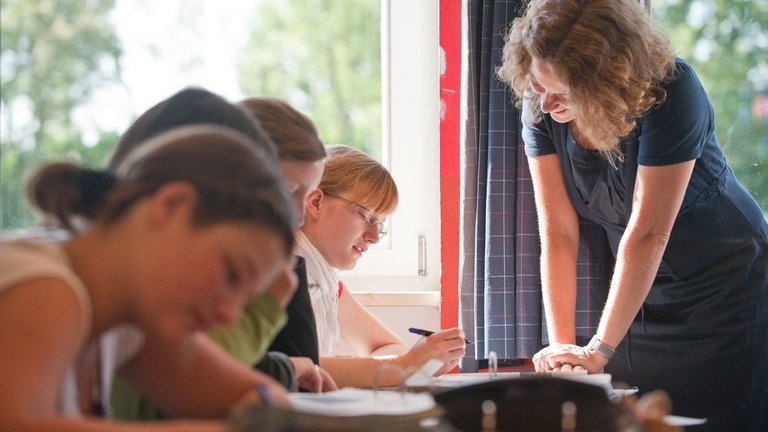
"Of course, parents are the real experts for their children, they know them best, which is why we attach great importance to an educational partnership with parents," explains Wies. In view of the fact that both parents often work more and more, however, homework or study time together is becoming increasingly scarce, and supervision by several eyes is difficult to implement. "But teachers or educators in homework or after-school care can and should also supplement the multiple-eye principle."