What is allowed, what is taboo and what is advisable when dealing with digital media for pupils?
It is a balancing act that schools and teachers currently have to perform: On the one hand, media education, the digitalization of schools and the integration of digital media in the classroom are finally becoming more of a focus and, according to the Standing Conference of the Ministers of Education and Cultural Affairs of the Länder in the Federal Republic of Germany, are being incorporated into curricula and teacher training. On the other hand, the vast majority of schools continue to ban cell phones or the use of smartphones etc. Digital media, and in particular students' own cell phones and smartphones, are a constant hot topic in the classroom - in the sense of a rather problematic and conflict-ridden issue.
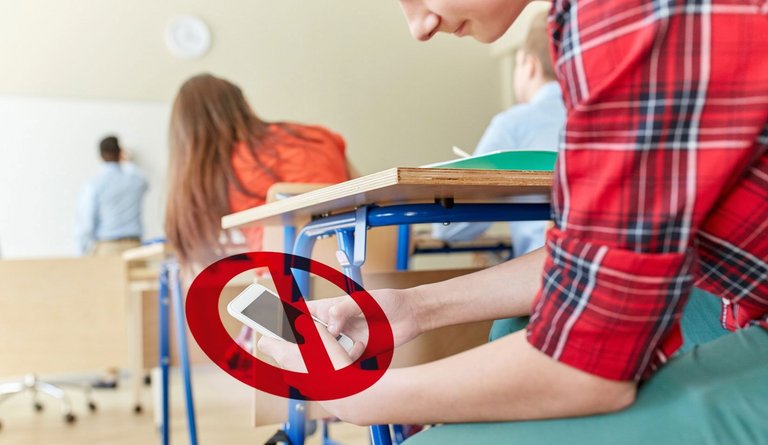
And how should teachers deal with this?
What is allowed and what is legally taboo when it comes to students using smartphones and cell phones?First of all, there is no general ban on cell phones in schools, as this would violate the general freedom of action laid down in Article 2 of the German Basic Law. After all, there can always be situations that justify the use of cell phones or smartphones, such as informing parents about cancelled classes or buses. However, what can be and often is prohibited is the use of smartphones or other digital devices in schools or during lessons.
This regulation is justified in the school regulations or school laws, e.g. in Baden-Württemberg, with the obligation of schools to ensure smooth school operations. The Bavarian School Act is the only one in Germany that goes so far as to stipulate that "cell phones and other digital storage media that are not used for teaching purposes" must be switched off - both in the school building and on the school grounds. Often, the obligation to cooperate is also stipulated in the school's legal standard. In any case, teachers and schools can rely on legal bases that allow for sanctions in the event of disruptive or prohibited use of cell phones in class.
Cell phone used? Cell phone withdrawn?
In most cases, teachers sanction disruptive or prohibited cell phone use by assigning extra work or homework or simply confiscating the device as a common educational measure. In purely legal terms, this may interfere with the property rights of the pupils or even the parents, but the measure of confiscation is expressly stipulated in the majority of legal provisions. This is because it is the only way for teachers to enforce a ban on use at all.
How long teachers are allowed to retain the devices, however, is not specifically stated anywhere. However, they should be guided by the legal principle of proportionality, which also applies to the removal of other items that disrupt lessons. Returning items only at the end of the school day is certainly permissible, but beyond that you are entering a gray area. Especially if parents are required to collect the smartphone from the school - after all, this is not a dangerous object such as a knife, which should only be handed over to the parent or guardian.
And what should you do if students are repeatedly caught using their cell phones contrary to the guidelines or use them to disrupt lessons? Nevertheless, under no circumstances should the device simply be confiscated for a longer period of time, as this is just as illegal as permanent confiscation and is even punishable as a property offense. It is better to contact the school administration and perhaps send a joint letter to the parents, drawing their attention to the infringement and the legal situation at school and in the classroom.
Caution - clear message for class tests!
Cell phones and smartphones can have more far-reaching consequences for students in class tests or even in a final or A-level examination. Every student is surely aware that smartphones offer a perfect cheat sheet in that information can not only be easily obtained and stored, but also passed on. Therefore, it is sufficient for examinations that the teacher clearly informs the students about the obligation to hand in their cell phones in advance. Any mobile device that is nevertheless discovered, even if it has not been used or switched on, can be considered an attempt to cheat, as an administrative court ruling from Karlsruhe has already confirmed. The situation is even more critical for final examinations. For example, the Baden-Württemberg Ministry of Education and Cultural Affairs has stipulated that simply carrying a cell phone with you after the exam questions have been announced constitutes cheating.
If a ban on carrying cell phones and smartphones in class tests is enshrined in school law, the ice is generally thin for students during exams: the teacher could penalize the violation of the law alone with a grade 6. Whether all the stops are actually pulled out in individual cases or whether a pupil has really credibly forgotten to hand in a switched-off device is of course ultimately at the teacher's discretion.
Searching a student's cell phone? Clearly not!
In any case, teachers are clearly not permitted to check the contents of (possibly used) cell phones on their own authority. As this would constitute an invasion of privacy, in the worst case scenario, pupils or their parents could lodge a complaint with the school authorities if a pupil's cell phone is searched.
However, if teachers or schools want to investigate reasonable suspicion of misconduct by pupils or even suspect that pupils have taken unauthorized photos or videos without the teacher's consent, the only option in the worst case scenario is to hand them over to the police if the pupil does not cooperate. Legal action can also be taken against recordings that have been posted on social networks by pupils without the teacher's consent, for example by taking legal action for injunctive relief, which can be followed by sanctions under school law.
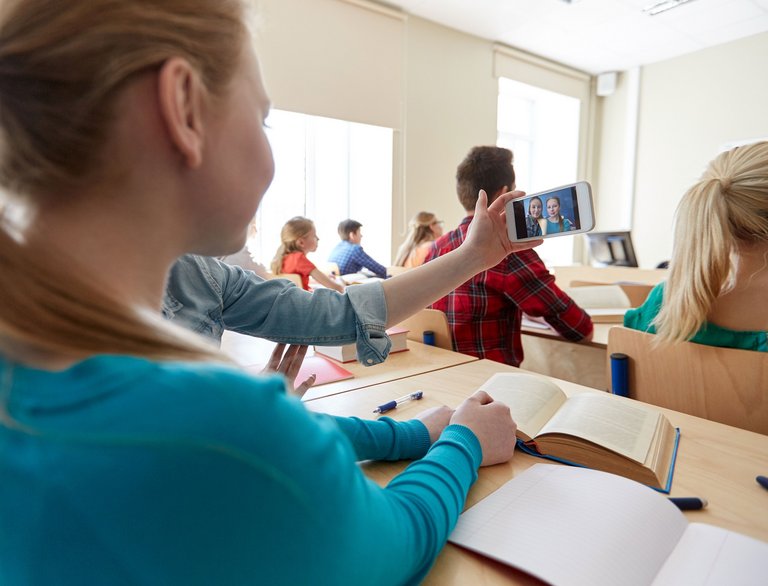
Accompanying the use of digital media
However, pupils are often unaware of the legal consequences of their careless actions, especially with images or on social networks. Teachers should therefore inform their pupils about the restrictions on the use of digital media in terms of school law and personal rights and also encourage them to be more media-conscious.
For example, it is perfectly permissible to use smartphones or other digital devices for teaching purposes. The easiest way to do this is, for example, for controlled internet research, to view YouTube videos relevant to the topic or to jointly evaluate movement sequences in sports lessons that are recorded on a cell phone. "It could also be used to record measurements in science lessons or to create small, digital notes or presentations on the subject matter," says Alexander Franz. The head of teaching at the Schloss-Schule Kirchberg boarding school is currently working with colleagues on a new media curriculum so that digital media can be integrated into the new IT curriculum in addition to the existing integration into the methods courses. Because one thing is certain: smartphones and the like will not be permanently banned from everyday school life - the question is rather how digital media and how to use them sensibly and with the support of teachers.