Why standard solutions only make limited sense for funding
Tutoring is a huge issue in Germany: experts estimate that more than 1 billion euros are currently spent on tutoring each year. According to recent studies, around 1.2 million pupils between the ages of 6 and 16 regularly receive tutoring in Germany. In view of this mass phenomenon, the question arises: does tutoring, as it is mostly practiced, make any sense at all - or what should be taken into account in tutoring so that it really achieves the intended effect?
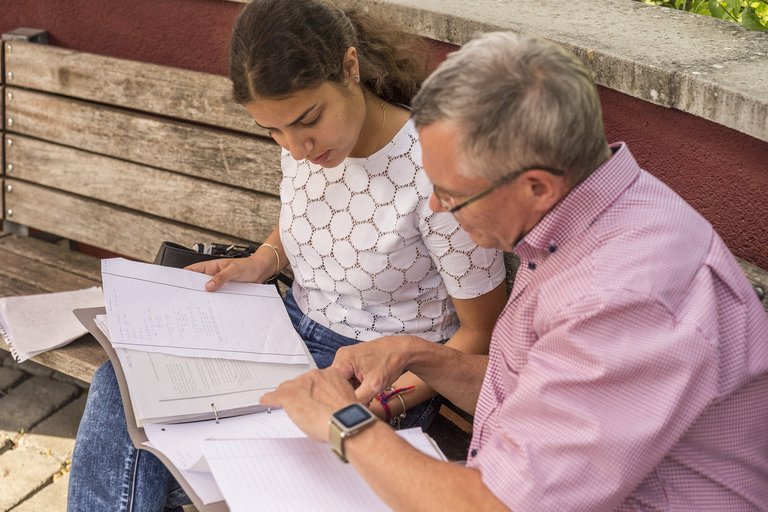
The fact is: there is no ONE solution for ALL.
At Schloss-Schule Kirchberg, boarding school director Melanie Wies emphasizes, the motto "Every child is different" applies for good reason. And every child is allowed to be different". This in turn means that every child or young person should receive individual support - so there are no standard solutions. Tutoring can certainly be a component of this individual support at times - however, it is important to ensure that the content and structure of tutoring is optimally tailored to the person, deficits, demands and needs of the pupil to be supported. However, there are some basic criteria for "correct", i.e. target-oriented tutoring ...
If tutoring, then "properly".
When learning problems and/or performance deficits are identified in pupils, the first thing to do - with the involvement of all those involved - is to determine the specific causes of the "problem" in order to provide optimal support, according to the experts at the Schloss-Schule. Manfred Schaffarczyk, educator and quality management officer at the Schloss-Schule: "As a mentor who directly supervises the pupils' lessons, I can help the children and young people to optimize their learning structures and methods, for example, which is so important because this is precisely where some difficulties originate. Learning to learn is very often a central key to success. Tutoring in the traditional sense is then often no longer necessary!"
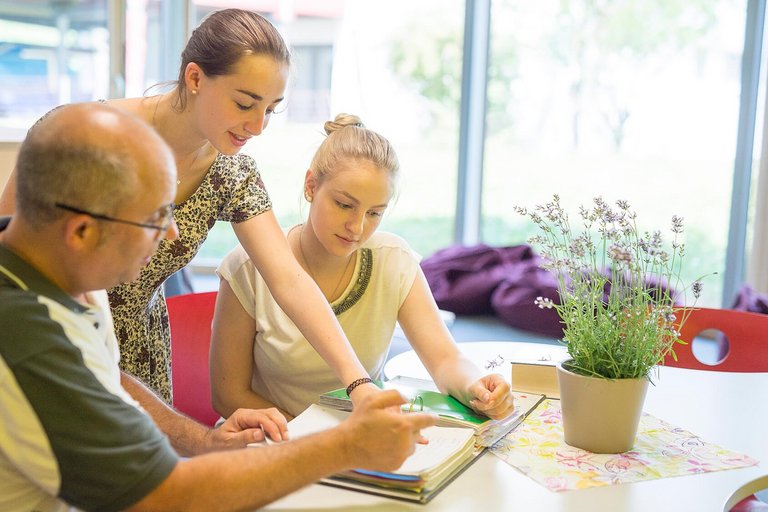
However, if the identified gaps in learning material are so large that in-depth, content-related support and assistance is required, the Schloss-Schule experts say that it is also crucial to observe the following principles when providing extra tuition:
- Close(est) dovetailing between school and tutoring: it is not only the Schloss-Schule experts who point out the importance of this aspect. Institutions such as the renowned Hans Böckler Foundation also state that it is extremely important for those responsible for tutoring to know exactly what material is currently being covered at school, what homework has been set and what specific difficulties the student being tutored is having.
- Clearly defined tutoring goals: The fact is that traditional tutoring must not become a "permanent institution". It must have a goal that is supported by all those involved (especially by the pupils themselves) - and should be limited in time. (Which is why tutoring contracts that run for several years, as are relatively often offered, should be questioned critically.
- Intelligent interaction between amateurs and professionals: A very high percentage of private tutoring in Germany is provided by amateurs, often as neighborhood help. "Melanie Wies and Manfred Schaffarczyk agree that it can make perfect sense to involve non-professionals - such as older pupils from their personal environment, students they know directly or siblings - in routine learning tasks. "However, when it comes to promoting the processing of new or completely misunderstood material, this should be placed in the hands of professionals - because this requires comprehensive pedagogical and technical knowledge." Reviewing vocabulary, practising basic solutions that have already been understood - these are typical tasks that non-professionals can certainly help with.
- Parents are not the better tutors per se: Parents are generally the most important companions and supporters of their children - there is no doubt about that. However, the above also applies to parents ... When it comes to teaching completely incomprehensible school material, for example, all non-professionals reach their limits - including most parents. In addition, parents as tutors can become a lightning rod for school frustrations due to their emotional closeness to their children, especially during puberty - with a high risk of escalation. In this respect, the same applies here: Help with routine learning exercises - yes, up to a certain age this makes perfect sense. However, as soon as parents want to replace the teacher in teaching new or incomprehensible subject matter, especially in the higher grades, it can become difficult, sometimes impossible and not effective!
- Adequate structures are extremely important: in Germany, tutoring is often offered in the form of professionally guided learning groups - and in many cases there is little to be said against this. However, there are children and young people who have problems with the group situation. Apart from the fact that it is important to resolve any social difficulties that may exist in the medium term, it may therefore be necessary in the short term to initially provide 1:1 support or in very small groups. It is crucial that the working environment, people involved and structures do not place any additional strain!
- Online tutoring: Online tutoring services have become increasingly popular in recent times. Melanie Wies from the Schloss-Schule: "Here again ... online services can be very useful for routine help. However, most of these services have the problem that the right solutions - with the wrong end results - are difficult to recognize as such and can therefore hardly be used as a starting point for further support."
- Important to know - support always makes sense, tutoring only in specific situations: The experts at the Schloss-Schule expressly emphasize that targeted support is important for all children and young people. For the normally gifted as well as for the weaker or highly gifted. The decisive factor is that it is tailored to the individual pupil! Individual and professional encouragement and support can open up amazing development opportunities for children and young people within their respective intellectual limits - but only if the child or young person is (or can be) convinced of this themselves. A corresponding parental will alone is not enough - and can lead to excessive demands.
Why classic tutoring is rarely necessary at the Schloss-Schule.
Classic "external" tutoring is also occasionally used at the Schloss-Schule in individual cases. However, it is only one possible module within a comprehensive system of individual support. The SKIL model (Schloss-Schule Kirchberg Individual Learning) takes into account the individual potential of each student and promotes this in a targeted manner. Pupils learn sustainably in projects according to their own interests, and methodical and social learning are also an integral part of the lessons.
The basis of support outside of the actual lessons at the Schloss-Schule is a 4-part support and encouragement system:
- Targeted homework supervision by specialist staff in small groups
Every boarding school pupil has to do their homework on their own, but they are supervised and accompanied. During the so-called work hours (1.5 hours per day for grades 5 to 9 - with an individual 15-minute break by arrangement), trained educators and specialist teachers take over.
They are the first point of contact, help with self-organization and provide support with structural and learning methodological problems. When it gets down to the nitty-gritty of the subject, pupils are "referred" to the so-called study rooms, where subject teachers then help with specific subject-related questions. Pupils at the Schloss-Schule then use the "quiet hour", which is mandatory for everyone, for individual revision and organizational matters.
All those involved (i.e. pupils, class teachers, subject teachers, mentors, study room supervisors) maintain a continuous exchange of information so that it can be recognized immediately whether additional support measures beyond homework supervision make sense.
- In-depth remedial courses in small groups
If this is deemed efficient by those involved in the individual case, the pupil to be supported receives in-depth support in small group courses.
Most of these courses take place directly at the Schloss-Schule, but in special cases they also take place outside the school. For example, for the many international pupils of the Schloss-Schule at the Goethe-Institut in nearby Schwäbisch Hall ... Although the international pupils at the Schloss-Schule receive very intensive support in acquiring German language skills anyway! The young guests from China, the USA, Mexico, Italy, France, Russia and many other countries around the world benefit from up to 12 hours of German at the Schloss-Schule in grades 9 and 10, including 4 hours of DfA (i.e. supplementary German subject lessons) plus 4 hours of DaF (i.e. German as a foreign language).
The specific small group remedial courses, which support Schloss students in their specific preparation for the Abitur, are similarly intensive!
- Supplementary basic courses
Also part of the Schloss-Schul concept up to grade 10 are the so-called basic courses in the core subjects English, German, math and Latin (1.5 hours per week each), in which 3 to a maximum of 10 children (on the recommendation of the mentor, subject teacher or class teacher) participate, if determined to be effective.
- Individual tutoring/support (if necessary or appropriate)
As the fourth stage of the Schloss-Schule support system, the Schloss-Schule also uses the system of individual tutoring/support for more extensive gaps in learning material - the decisive factor here: always in close and intensive exchange with the respective subject teachers and the class teacher and always with a S.M.A.R.T. goal (specific, measurable, achievable, realistic, scheduled).
If tutoring is used, the Schloss-Schule relies on experienced and proven non-professionals from the surrounding area for routine help, and exclusively on proven specialists for the teaching of new, incomprehensible content, about whom those responsible have themselves formed a well-founded professional opinion, so that the quality of this support is reliably ensured.
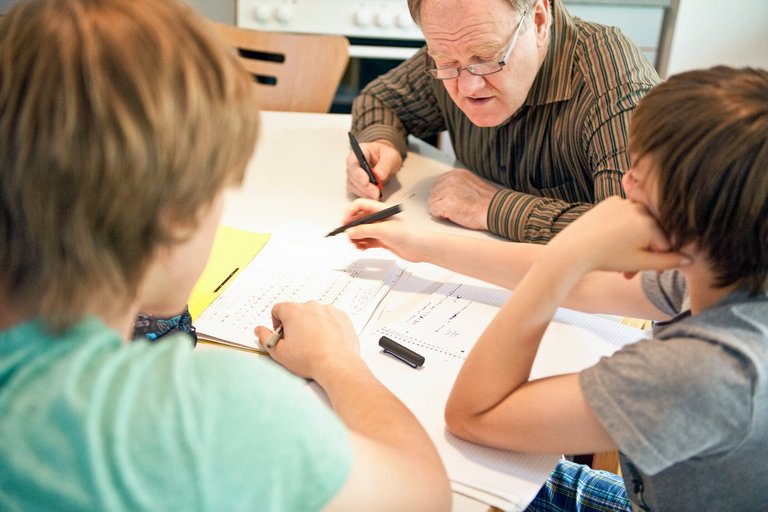
Important to know:
There is currently no official supervision of private tuition facilities in Germany. One of the central demands of institutions such as the Böckler Foundation is therefore the introduction of state examinations or inspections. Parents should therefore get their own comprehensive picture of any tutoring facilities that may be involved!
CONCLUSIONS:
A school without tutoring and individual learning is probably not realistic. However, with well thought-out support concepts, such as those practised at the Schloss-Schule, which focus on the individual, the frequency and amount of time required can be significantly reduced or, in some cases, completely avoided. The decisive factor, regardless of how detailed the support is, is that it is implemented professionally and optimally meets the individual needs, wishes and potential of the individual child or young person.