Where is the digitalization of schools leading us?
How the Schloss-Schule has already changed - and what that means for the future.
There's no question about it: the last few weeks and months have changed Germany (and the world) more dramatically than almost any other period since 1945. To protect against the Covid-19 virus, the amount of digital interaction and communication between people has reached a level that no one could have imagined in mid-2019. Especially in schools - and also at the Schloss-Schule. Time for a first interim assessment - and a look into the future!
Starting point
The digitization offensive began with the "weakening" school software
Let's take a brief look back: Well before the coronavirus pandemic, those responsible at Schloss-Schule realized that the school software at the time was reaching its limits in terms of development and updates. As a result, the school management and Jens Beeck, the specialist teacher in charge of the topic, decided to thoroughly examine the provider market. After a comprehensive cost-benefit analysis of various products, the decision to purchase new school software was made in 2019. "This will not only meet the specific requirements of school organization support, but also offer comprehensive options for digital exchange, digital forms of teaching and digital support for traditional classroom teaching," says Jens Beeck.
The decisive factor during this time was the plan to make greater use of digital forms of learning, interaction and communication!
After all, nobody was thinking about coronavirus requirements in 2019. But the new school software (also) provides all the necessary options at the time of purchase! At the same time, the Schloss-Schule has been (and continues to be) continuously investing in the further development of the school's hardware and internet connection for some time now, as well as instructing and training the teaching staff and pupils in its use.
"As a result, in addition to various devices permanently installed in the school buildings - e.g. high-performance screens - we now also have two class sets of iPads and additional iPads for the teaching staff. In combination with the new school software and the controlled connection of other end devices outside the school, a powerful network has been created over the last four years that enables state-of-the-art forms of interaction and communication," says Ralf Martius, geography and history teacher, archive manager and multimedia consultant at the Schloss-Schule. "The aim of all these measures was initially to broaden the spectrum of interaction between pupils and teachers and to open up new and innovative teaching and learning concepts. Without being able to foresee it at the time, however, all of this was also the basis for schooling under the conditions of the corona contact ban!"
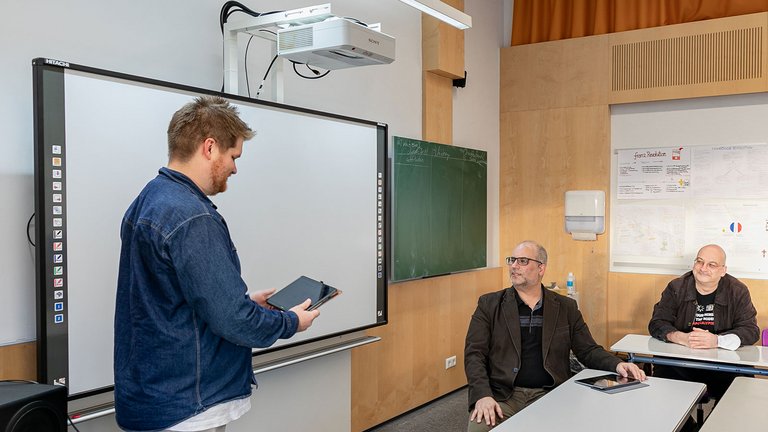
In fact, the necessary technology was already "available" at the time of the coronavirus outbreak and had already been used on a trial basis - but it experienced its baptism of fire when, due to coronavirus, all of the options that had been used selectively up to that point suddenly had to be used in full. And it turned out that it worked.
Test in the crisis
In times of crisis, alternative teaching formats could (and can) be used immediately thanks to the Schloss-Schule's modern technology
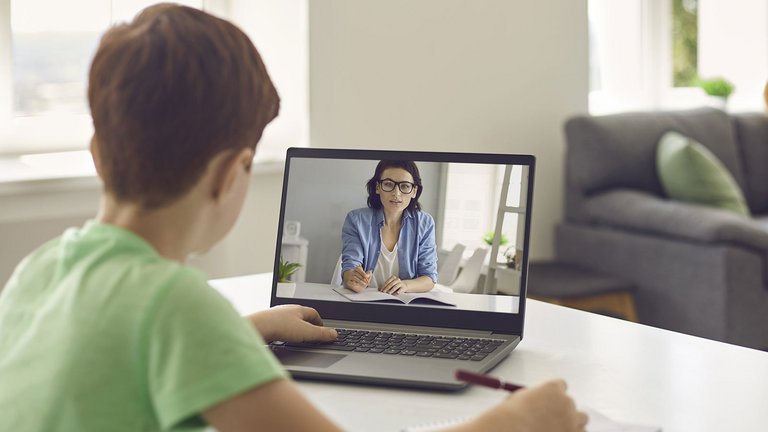
Senior teacher Lars Saltuari, teacher of German, chemistry and drama and, among other things, responsible for video lessons in the 10+ class: "Using our modern school software, we were able to transfer pupils for whom this was or is necessary to online lessons relatively easily at the crucial time. We can use it to present lessons on screen, actively work on topics and interact with pupils via chat or live. It is possible to carry out classwork and homework and also support the children and young people with their homework - but above all, it is also possible to allow pupils to communicate and interact with each other. This is so important because it helps to maintain a sense of community and belonging, or even to build it up in the first place for new pupils!"
So everything in the green? So the future, which is still very uncertain at the moment, can come?
The Schloss-Schul digital technology has passed its test.
Minor teething problems have now been overcome. The school, staff and pupils are now coping well with it both in day-to-day operations and in emergencies. Technical restrictions tend to arise when the online connections at the pupils' homes are "weak" - or the hardware at home is no longer up to date. (The Schloss-Schule was and is unbureaucratically helpful here - and can also provide loan equipment if necessary). It is also clear that the new technical possibilities offer interesting additional options - from various online interaction options and the use of exciting online media content to the establishment of online learning groups among pupils.
"However," says Lars Saltuari, "the aim should not be to make online forms of education the standard once the coronavirus pandemic is over. Face-to-face teaching simply offers advantages that can only be transferred to the digital world to a limited extent. Especially in the social sphere, but also in terms of the actual teaching. For the vast majority of pupils, as well as for us teachers, real interaction contributes directly to a positive school experience and therefore also to the success of good teaching."
It is also important to know that the hybridization of lessons that is currently necessary - i.e. the partial duplication of lessons in face-to-face formats for pupils who are present and digital formats for pupils who are absent - cannot be a permanent solution. In fact, this can currently only be achieved through the disproportionate deployment of Schloss-Schul teachers, which cannot be expected in the long term.
The question is: What does the future look like?
Outlook
Regardless of the coronavirus pandemic and its unpredictable effects on future school activities, it is already clear that the digitally enhanced technologies and formats at the Schloss-Schule are opening up a wide range of new options that need to be exploited.
The Schloss-Schule has therefore set up an evaluation project to compile the findings to date and the opportunities that can be derived from them. A digital strategy for the future will then be developed on this basis, taking into account opportunities and limitations in equal measure.
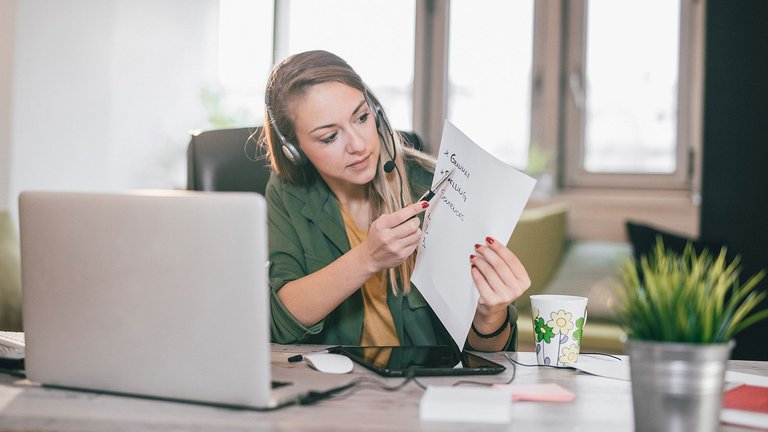
One of the many practical findings that will be incorporated into this future strategy is that digital forms of teaching and schooling offer interesting opportunities for children and young people with school anxiety, for example. Digital forms of contact make it possible to gradually introduce these pupils to face-to-face lessons and thus to the classroom community. It was also recognized how effective digital support for homework can be - both by teachers and by other pupils. The combination of these two support and cooperation options in particular creates real added value for pupils. If an open question on a homework assignment is initially discussed within the class, the teacher can easily be involved later on if necessary. This strengthens group work and integrates specialist expertise at the same time!
Putting these findings into practice?
As soon as the additional coronavirus burden eases somewhat, the insights already gained will be evaluated in detail in special working groups of the Schloss-Schul-Kollegium and condensed into concrete proposals for action. The working groups for this have already been formed and initial ideas for implementation have already been collected. We will therefore be able to inform you about the concrete implementation plans very soon!
Until then, we wish you one thing above all: stay healthy!
If you have any questions about the digitalization offensive and/or other topics at the Schloss-Schule, we will be happy to answer them: Contact person
You can read about how well the first lockdown situation in spring 2020 was handled at the Schloss-Schule boarding school in the article "School and corona - with structure against cabin fever".