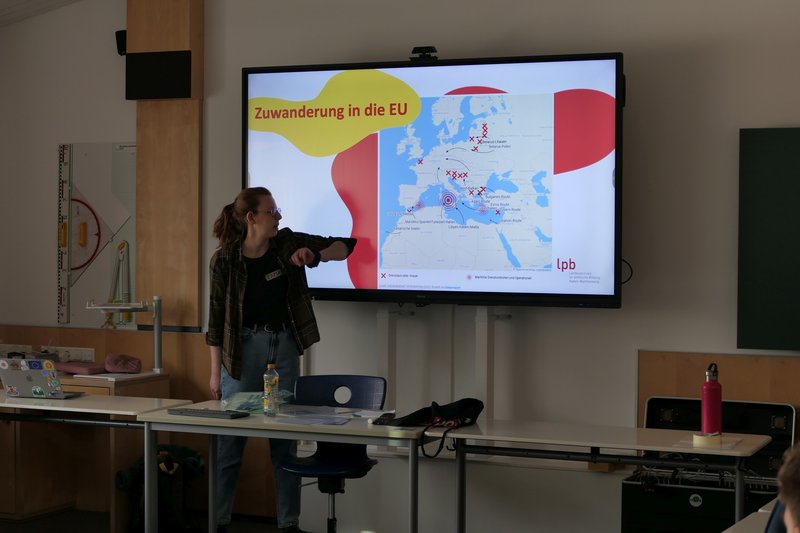
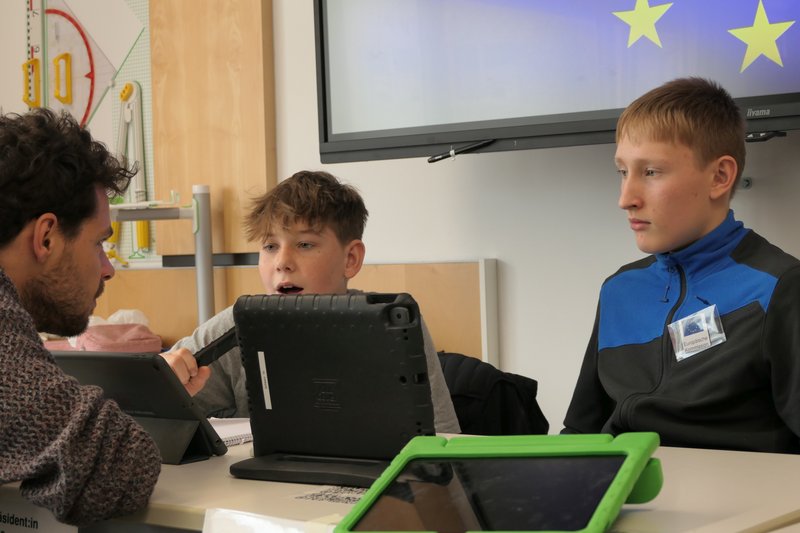
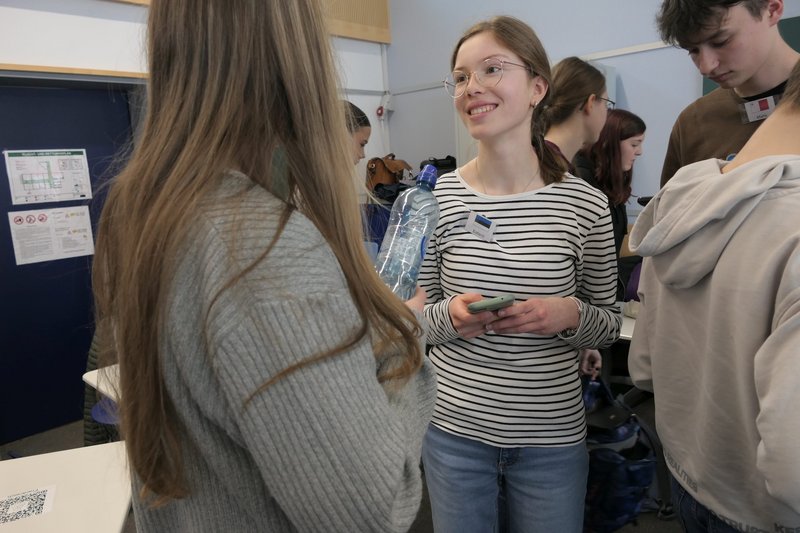
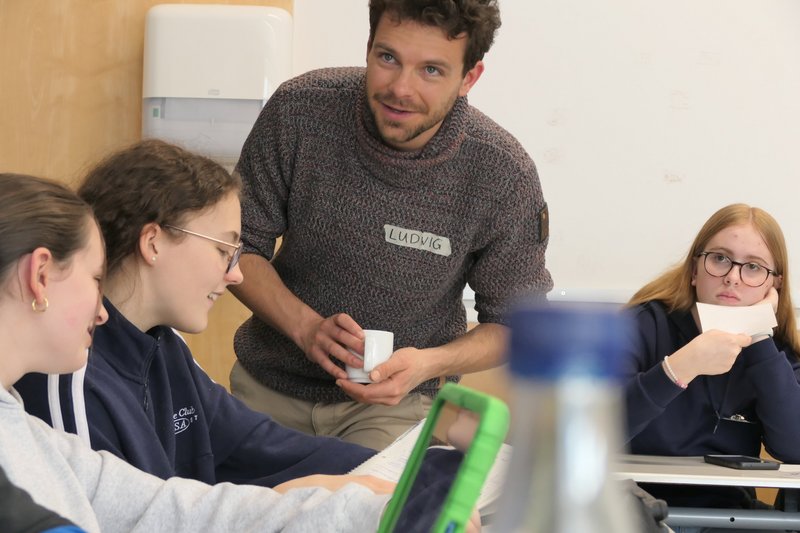
At the start of the simulation, we had an introduction to the topic, during which we had to estimate the number of refugees and their destination continent, among other things, and divided ourselves into groups accordingly. Afterward, we were given an explanation of some technical terms related to the topic, and we watched a film about refugees and their difficult circumstances.
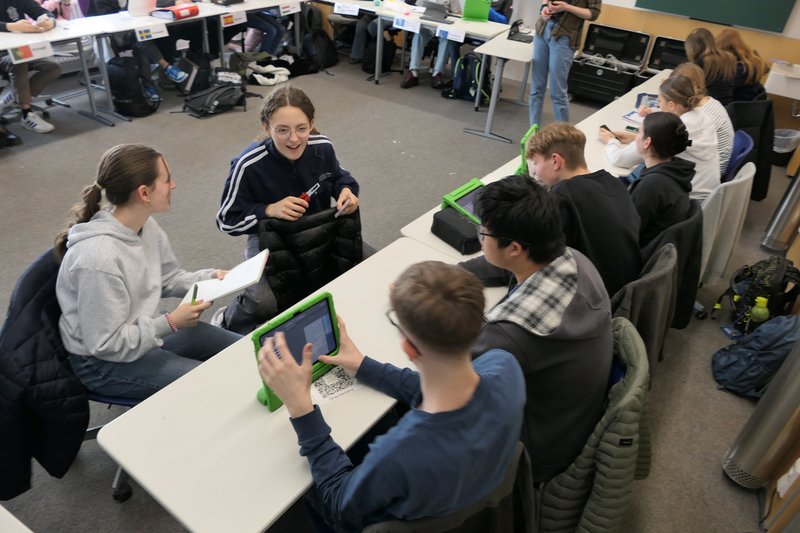
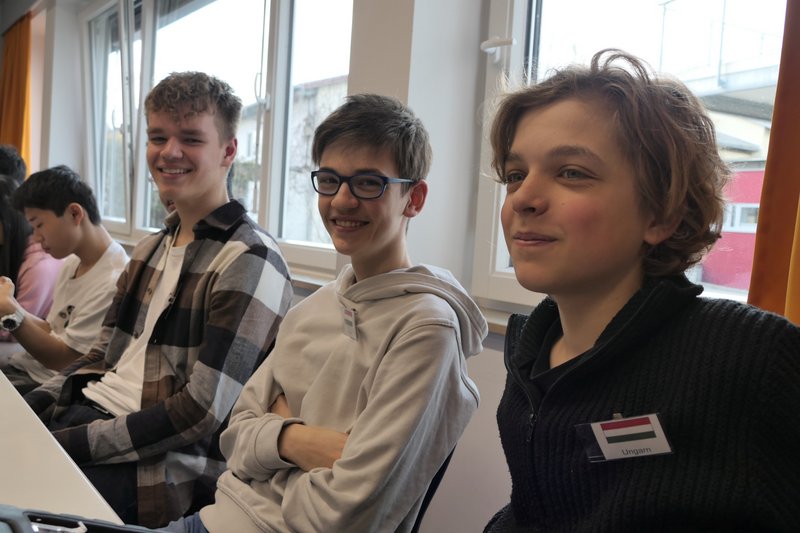
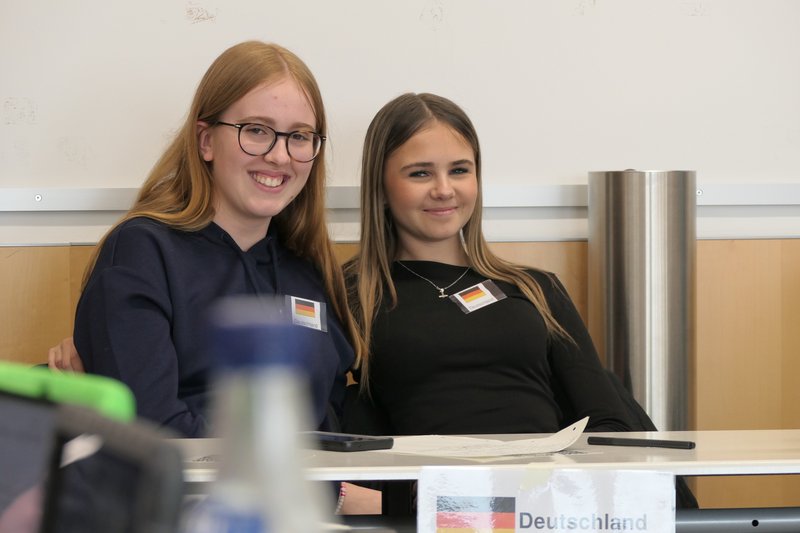
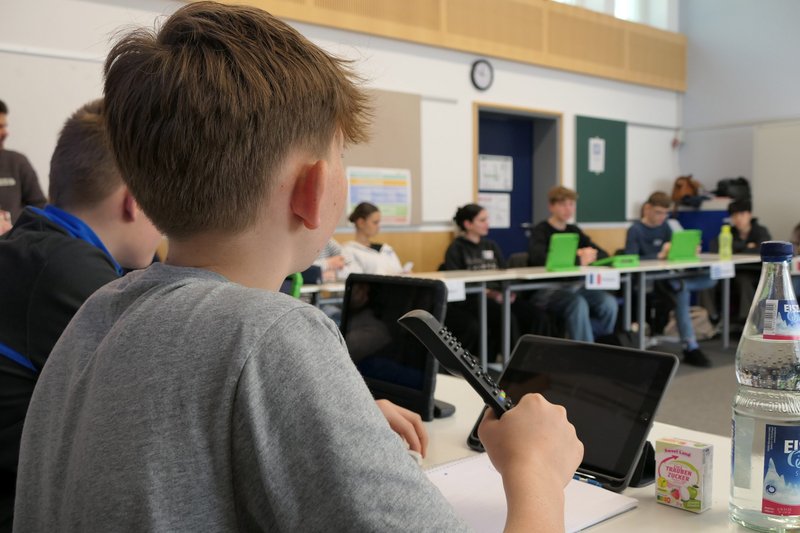
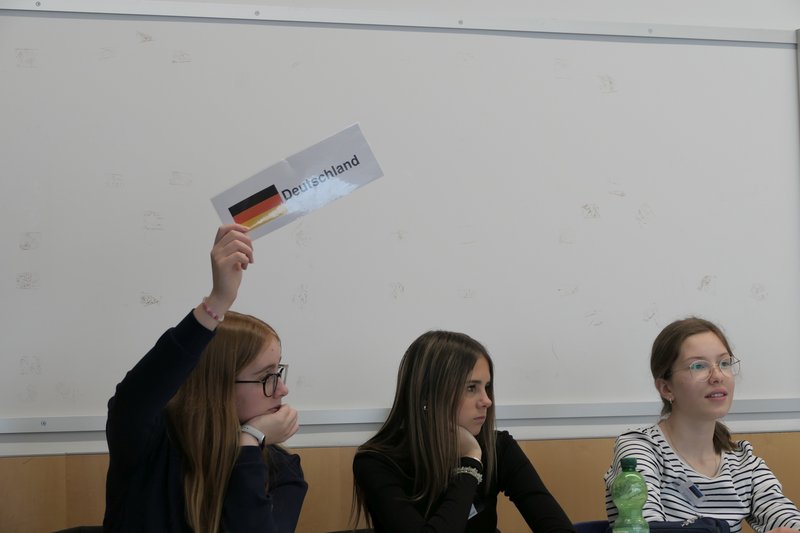
We were then assigned different EU countries to represent in a role-playing exercise. In addition, four of us were assigned the role of reporters. We were then to represent these roles in a simulated assembly. We were to identify and present arguments that reflected the country’s position and then discuss them with the other countries. In the end, each country was allowed to propose solutions with other supporting countries, which were then voted on in the assembly. Ultimately, we voted in favor of three guidelines, and four were rejected. One example of a law that was passed was maritime rescue.
We were very surprised by how this process works in reality. We didn’t know that if one country opposes a law, it is immediately rejected. The simulation largely mirrored reality, as it wasn’t always possible here either to reach a consensus on the guidelines.
Through the voting, it became clear that the countries are increasingly isolating themselves and want stricter controls with clear rules, as well as further training for Frontex to further secure the borders.
Afterward, the experiences gathered that day were clearly summarized and discussed once more. Through this, we learned how decision-making processes unfold at a European Council summit.