At the Schloss-Schule, every child finds their place in the group
Whether a person, regardless of their age, feels lonely and suffers from it does not depend so much on whether they are alone more or less often - because this is perceived differently. Rather, the decisive factor is whether he or she finds his or her place in the relevant groups in the immediate and wider social environment and experiences real and positive contacts in the intensity that is individually (!) perceived as pleasant!
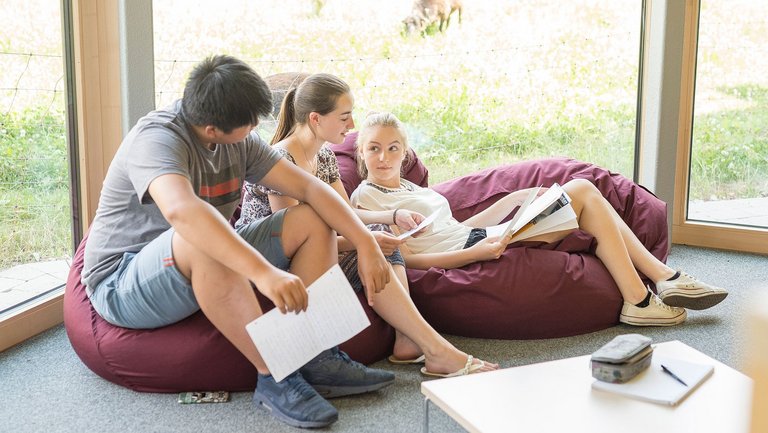
The digital world gives the superficial impression of being connected, especially via social media - but often it only replaces individual loneliness with collective loneliness: you are part of a virtual group and still feel lonely - and suffer as a result!
It is often very difficult for parents to counteract this development. Because as lonely as the digital world makes your child feel in the real world, well-intentioned help (“Go out and meet real people ...”) is not always met with approval.
This is precisely why it is so important for children and young people to experience real group participation on a wide variety of levels ...
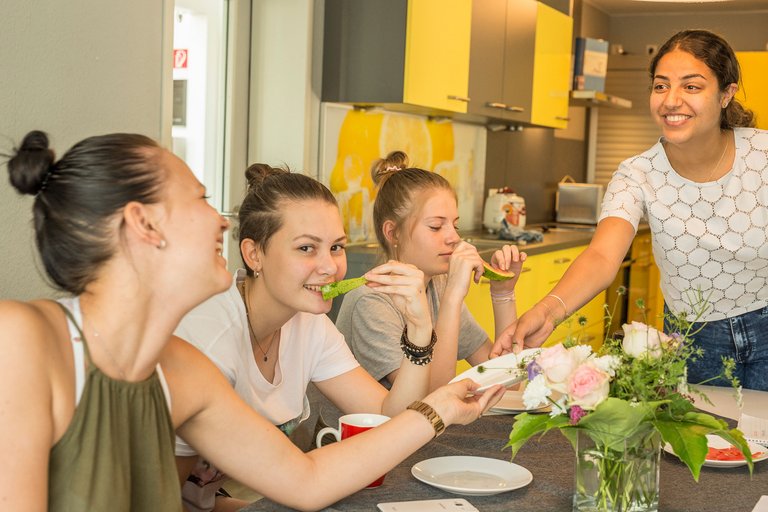
... in the family or (as in our case) in a new living community with the direct boarding school resident, in the individual circle of friends, in the respective age-specific boarding school building - also together with the adult caregivers responsible there (educators and/or boarding school management and teachers). But also in even larger groups, such as the entire school or the school environment ...
Ultimately, all of this is about setting the course today for a child or young person to feel like an integrated member of a wide variety of social groups tomorrow and the day after tomorrow - right up to the feeling of being part of society as a whole!
At a boarding school - like ours - this is perhaps a little easier than elsewhere.
Especially as a spatial change can often have a positive effect on the basic mood of children and young people.
The fact is that all children and young people who attend our boarding school are equally faced with the task of integrating themselves into different groups - and all (!) children and young people are given equal and comprehensive help with integration. At the same time, the feeling of closeness and distance, which is perceived differently in each case, is absolutely preserved; because here at the Schloss-Schule, every single child is perceived and valued as an individual with their own personality and with very different strengths, weaknesses, likes and dislikes!
However, in view of the negative effects of excessive and non-age-appropriate consumption of a wide range of digital media and interaction services, it is important, especially in the current situation with new boarding school pupils, to set clear, restrictive rules (and enforce them) and at the same time to make the children and young people “smart” in all digital issues and topics.
The Schloss-Schule has developed a holistic digital concept for precisely this purpose, which you can view here.
Creating real occasions for contact and at the same time providing comprehensive support for children and young people in their group integration ...
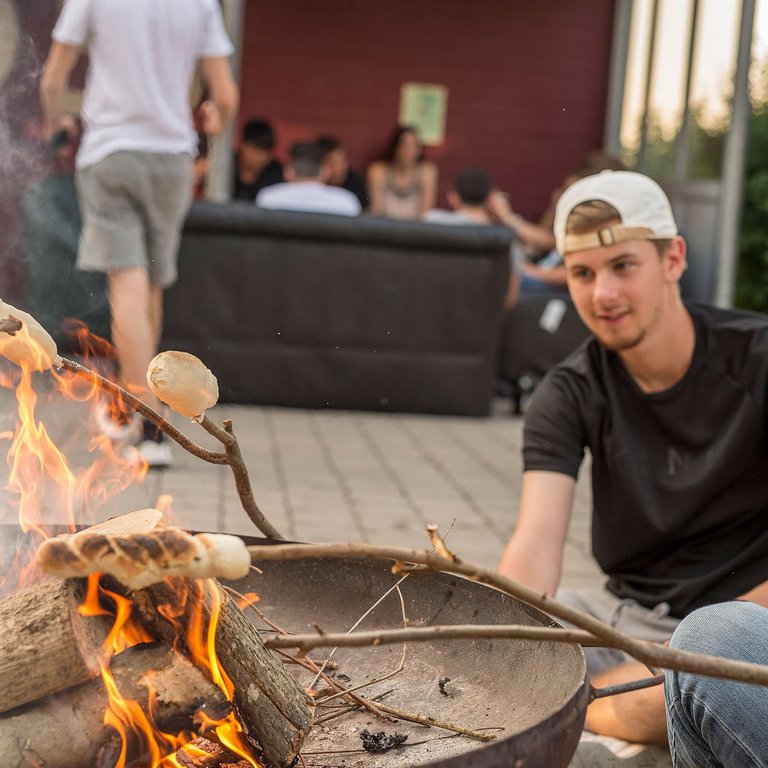
... is probably the best way to describe the other two pillars of the Schloss-Schule's anti-loneliness strategy. In fact, we at the Schloss-Schule attach great importance to offering the children and young people in our care as many group activities as possible: joint excursions, sports, theater, music ... the range is huge!
And even in the toughest coronavirus phase, we managed to keep a lot of this going. (It was helpful, for example, that the residents of a boarding house were allowed to be active together as a common household).
It is at least as important to take the children and young people gently by the hand in their life in the boarding school and at school, for example with the help of the very high staffing ratio (which prevents quiet children from being 'lost' in terms of perception) or via a mentoring program in which older pupils specifically support much younger ones in their first steps at school.
We have also had very good experiences with more or less “turning the topic around” and encouraging pupils to do social internships - and have also made a very specific social curriculum part of our overall curriculum.
In fact, it has been shown that it is good for children and young people to help very old or otherwise impaired people to participate in life. Which is of course a particularly positive effect, because this experience has a self-reinforcing effect on their own sense of belonging to a group - and that's what it's all about!