Youth welfare facility
Boarding school Schloss-Schule KirchbergAs a place of well-being, we at the Schloss-Schule also offer children and young people in difficult situations, with developmental delays or school problems such as school anxiety or school refusal, with ADD / ADHD, autism, Asperger's autism, with learning disabilities such as dyslexia or dyscalculia support and have also been working very successfully for many years with youth welfare offices in the field of youth welfare.
Crucial: The environment, the community and individual support!
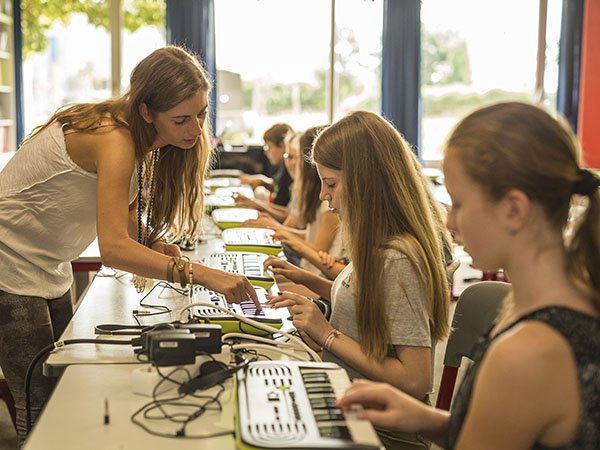
Around 300 pupils currently attend our facility. Of these, around 200 are so-called "local pupils" and around 100 are boarders - of which around a third are children and young people who are supported by youth welfare services.
- The unity of school and boarding school combines the social component of youth welfare with optimal school support and encouragement. The focus is on the individual potential of each pupil.
- Experienced educators, teachers and mentors support the children and young people, taking into account their individual strengths and weaknesses.
The school
Schloss-Schule Kirchberg is a state-approved grammar school with a boarding school run by a non-profit foundation in the tradition of reform education. Boarding school students have the opportunity to attend the secondary modern school (Hauptschule, Werkrealschule or Realschule ) in the immediate vicinity in addition to the grammar school; there is a constant exchange with the teachers there.
Our school offer includes:
- Structured daily routine at school and boarding school
- Holistic education of our pupils in both the private and school environment
- The premise of recognizing and promoting student-specific potential
- Joint homework supervision and cooperation between teachers and students on an equal footing
- Teaching in small classes (max. 20, current average: 17 pupils) and working in small groups
- Schooling with special concepts such as the SKIL model (Schloss-Schule Kirchberg - Individual Learning) or the special 10th grade "10plus" (for the supported transfer from other types of school to grammar school)
The support
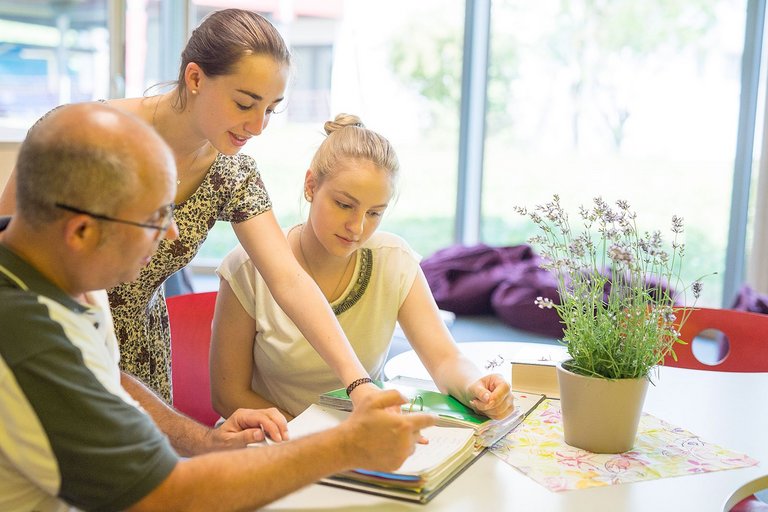
In the boarding school, during homework supervision or as part of the study groups, the children and young people are supervised by specially trained mentors. These mentors have curative, socio-educational or educational training or work as teachers at the Schloss-Schule. Thanks to the unity of school and boarding school, the mentors are in constant contact with their teacher or educator colleagues and can get to know and support the children better both at school and in their private lives.
The boarding school staff regularly exchange information with the relevant youth welfare offices.
In addition to submitting development reports on the individual pupils, help plan meetings are held at the Schloss-Schule once every six months. These are attended by the pupils and their legal guardians, the youth welfare office and the teachers at Schloss-Schule. If therapeutic support is required for pupils, Schloss-Schule Kirchberg works closely with therapists and psychologists from the surrounding area or with a nearby therapeutic center. Systemic counselors and a school psychologist are also available as in-house support.
The boarding school infrastructure
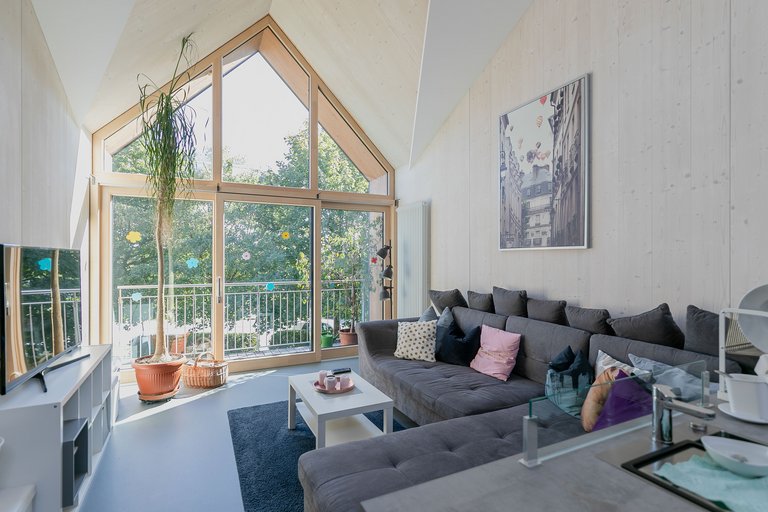
The modern residential, functional and school buildings of the Schloss-Schule are all located on a well-kept park on the edge of the small town of Kirchberg an der Jagst in the rural Hohenlohe region in the north of Baden-Württemberg.
The boarding students are generally accommodated in spacious and modern double rooms. Older young people or those with educational needs can also be accommodated in a single room.
The Schloss-Schule Kirchberg has its own kitchen for fresh meals prepared by the Schloss-Schule itself and a light-flooded dining room. Lunch is eaten together in the dining hall. In addition, the boarding students have access to the kitchens in their respective houses, where they can spend time together and cook together at the weekend.
The freedoms and duties
At Schloss-Schule Kirchberg, children and young people are actively involved in everyday school and boarding school life: Whether as pupil or boarding school spokespersons, children and young people have participation rights in almost all bodies and conferences and therefore have the opportunity to represent their interests and make requests and suggestions.
In addition to their rights, duties must also be observed within the framework of the school and boarding school regulations. For example, boarding school students in years 8 to 10 have two days of kitchen duty every two months. One "duty" that boarding school students are usually happy to fulfill is participating in at least two extracurricular activities in their free time.
Individual support in accordance with youth welfare
Children with increased support needs in particular should benefit from the individual support measures at the Schloss-Schule (target agreement and help plan discussions, extra help, therapies). The aim is to strengthen them in their personal development and social skills and to lead them on an independent path in life by obtaining a school-leaving certificate.
Behavioral changes are to be achieved by embedding them in a structured daily routine with school, homework, etc., as well as support through individual discussions, possibly with external therapists. The focus is also always on the relationship with parents and family, which is to be improved by taking on the educational function at the boarding school, in order to enable a return to the family after school if necessary.
The social structure and community life and experience at the boarding school can often lead to a change in the children's behavior. If necessary, individual support plans are drawn up together with educators, teachers and external therapists and specific targets are agreed with the children/parents on a regular basis.
For young adults aged 18 and over in particular, the focus is on supporting their personal development and helping them to lead an independent and self-reliant lifestyle. The aim is to achieve a successful school-leaving certificate as a basis for a subsequent apprenticeship or the start of a course of study.