When families are considering boarding school, they understandably often start by focusing on the big-picture questions: Should our child attend boarding school at all? Which educational approach is right for us? What is daily life like there? But by the second step at the latest, the question of the boarding school’s location also comes up. And from our perspective, it’s definitely worth taking a very close look at this. After all, when you choose a boarding school in Germany, the location always comes with its own specific conditions. In our case, these are the conditions of a boarding school in the state of Baden-Württemberg.
That’s exactly why, some time ago, we launched a dedicated website on the topic of “Boarding Schools in Baden-Württemberg,” designed specifically to address the key aspects and present essential information in a particularly clear and organized manner for those interested.
Quick Overview on Our Special Website “Boarding Schools in Baden-Württemberg”
So if you’d like to get a quick overview, the best way is to visit our special website, “Internat Schloss-Schule Baden-Württemberg,” to get a first impression.
And if you’d like to explore the topic of boarding school locations in more detail…
In this article, we’re deliberately taking a step back to examine the location issue from an even more fundamental perspective and analyze why we at Schloss-Schule view our specific location in Kirchberg an der Jagst, in northern Baden-Württemberg, as a particular advantage for many children. But first, let’s look at the state:
The Role of the Respective Federal State in Determining the Location of a Boarding School
Every federal state in Germany has a slightly different approach to its school system. The key factor here is the respective state school system, with its very own curricula, academic tracks, and exam formats. That’s why this “state school system” has an influence that should not be underestimated.
A Brief Explanation: What Is Meant by “State School System”
When we talk about the “state school system,” we’re not referring to formalities, but to very practical questions: Which subjects and academic tracks are actually available? How is the curriculum structured across grade levels? In which subjects are exams administered—in writing, orally, or through practical assessments? And what do the transitions look like between Realschule, Gymnasium, vocational school, or college? Especially when moving from one federal state to another, families notice that these aspects can differ significantly—for example, in the sequence of language courses, in specialized subjects, or in the structure of upper secondary education.
Let's therefore take a closer look at the situation in Baden-Württemberg:
Baden-Württemberg is a federal state that has traditionally placed great emphasis on solid educational programs, specialized tracks, and a robust foreign language and STEM education. This is evident in both the Gymnasium and the Realschule systems. For children and teenagers with a strong aptitude for languages, this means, for example, that English is firmly anchored in the curriculum, with other languages such as French or Latin building upon it; and additional options like Spanish can be deliberately used to help students develop their academic profiles.
At our boarding Gymnasium, we therefore deliberately offer Spanish as an additional profile subject alongside English, French, and Latin. Students can begin either in 8th grade or as a late-start foreign language in higher grades. In this way, we deliberately draw on the opportunities offered by the Baden-Württemberg system and combine them with our own language profile.
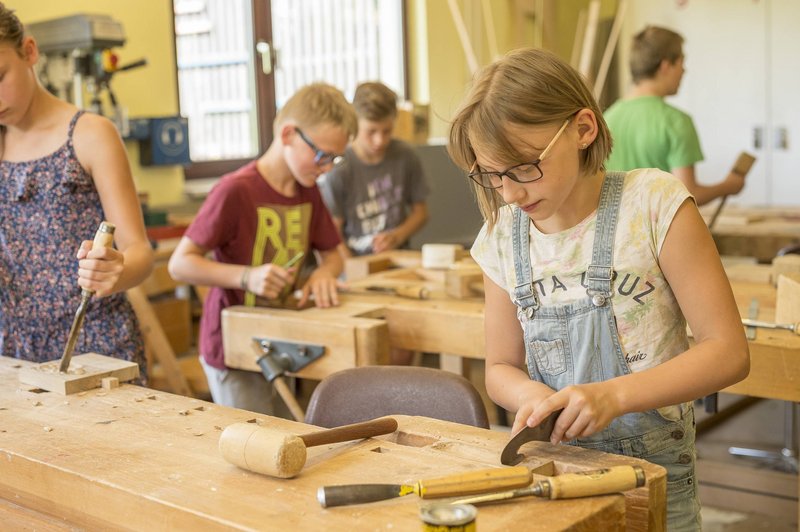
For children with an interest in science and technology or artistic talent, the Baden-Württemberg system also offers clearly defined profile tracks. We incorporate this opportunity through our profiles in Science & Technology and Visual Arts.
Children and teenagers who enjoy experimenting, building, or learning through inquiry will find a natural fit in the Science and Technology (NwT) track; children who express themselves through design and creativity can develop their strengths in the Art track. The fact that these tracks are firmly anchored in Baden-Württemberg’s curriculum gives parents the assurance that this focus is officially recognized and can be incorporated into their child’s individual academic journey.
Another important topic is the intermediate school leaving certificate.
Baden-Württemberg has its own independent Realschule system with pathways to advanced degrees and vocational training opportunities. Here at Schloss-Schule, we take advantage of this by offering both the traditional Gymnasium curriculum and the option to transfer from the Realschule to the Gymnasium.
For many families, this is a major advantage: They don’t have to make a final decision about their children’s educational path as early as age ten or twelve, but can work with us to see how the child develops and which degree makes the most sense in the long run.
Also important: What recent studies say about educational attainment and how we address this at Schloss School
National studies such as the IQB Education Trend show that academic performance in Germany is under pressure overall. This (unfortunately) also applies to Baden-Württemberg, particularly in German and among students from challenging backgrounds. However, it’s worth taking a closer look at the details: In the IQB Education Trend 2022, which examined the competencies of ninth-graders in German and English in a comparison across Germany, Baden-Württemberg was once again able to position itself among the top federal states, particularly in English.
The state-level analyses do indeed point to a positive trend and indicate that the state has (at least in part) managed to buck Germany’s general downward trend—particularly in areas where systematic investments have been made and continue to be made in language support and instructional quality. We at the Schloss-Schule do not view these results as a reason to rest on our laurels, nor as proof that “everything is perfect.” For us, they are rather an indication that Baden-Württemberg is performing at a sustainable level in key areas of competence and that individual efforts to improve quality (such as those we undertake to a particularly high degree) are having an impact.
So when we expand our school’s foreign language offerings and exchange programs, we do so within a system that has already proven to perform well—particularly in English—and in which we remain highly attuned to the challenges in German and in core competencies as a whole. Every day, we see that academic test results are only one side of the story. The other side emerges in the classroom, within the boarding school community, and in the form of our students’ highly individual learning journeys.
Tip: If you’re looking for concise answers or information on the question “How does a boarding school in Baden-Württemberg work in detail?”, we’d like to refer you once again to our main overview page at https://schloss-schule.de/internat-baden-wuerttemberg/.
Kirchberg an der Jagst and the Jagst Valley: Why Our Location Is Good for Children
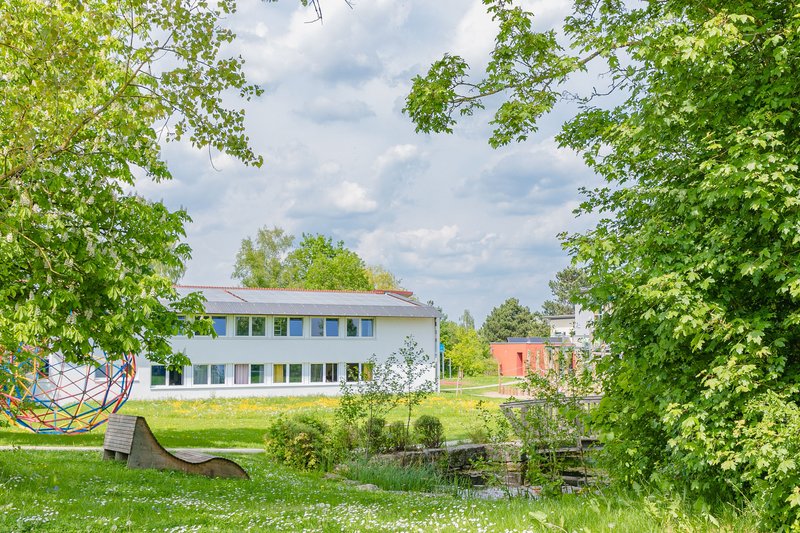
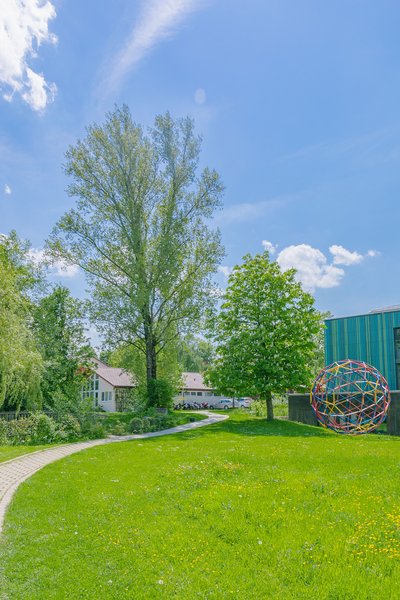
All state-specific and systemic aspects would only tell half the story if we didn’t also talk about the specific place where a child studies and lives with us as a boarding student. Our Schloss-Schule is located in the exceptionally beautiful town of Kirchberg an der Jagst, in northern Baden-Württemberg, nestled in the picturesque surroundings of the Jagst Valley. Our region is predominantly rural, offering plenty of nature, open spaces, and tranquility, yet it is also well-connected to major transportation routes and cities.
In a nutshell: What we mean by “a quiet location in the Jagst Valley”
By “quiet location,” we do not mean “remote” or “hard to reach,” but rather a region where school buildings, boarding facilities, and sports and recreational areas are all located within a manageable radius—and where children have short, safe routes to these places. From Kirchberg, cities such as Crailsheim, Schwäbisch Hall, and even larger urban centers are easily accessible by train and via the A6 and A7 highways, while at the same time, noise, traffic stress, and the anonymous atmosphere of big cities remain largely absent from the students’ immediate daily lives.
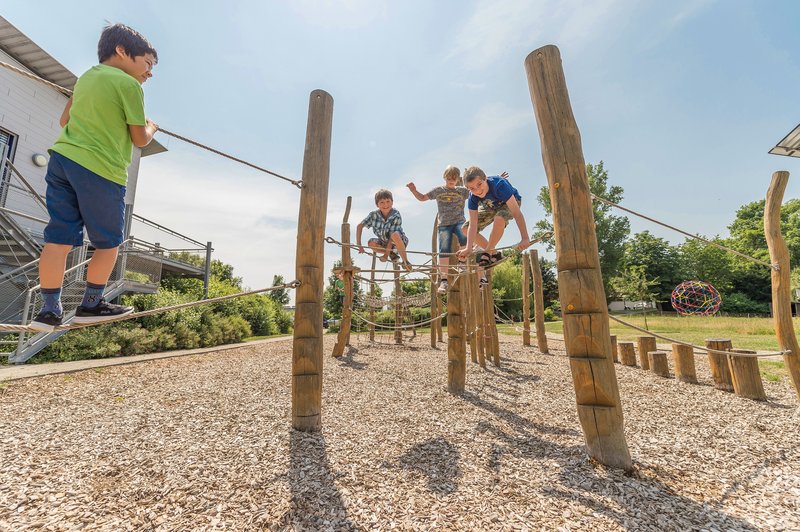
Many families appreciate precisely this situation, which we are able to offer: a clearly structured school and boarding school routine in the mornings, followed by outdoor activities in the afternoon (after homework and study support) and in the evening, paths free from big-city stress, and a manageable environment where students quickly feel at home. For many young people, this is a stark contrast to their previous daily lives in densely populated regions. They can move about freely outdoors, find quiet spaces and places to socialize on a beautiful campus (which is deliberately designed to be spacious and close to nature) and in the stunning surroundings in and around Kirchberg.
We are well aware that a more urban environment can also be appealing to some young people. That’s why it’s important to know: Anyone looking for the vibrant city life right outside the school or boarding school gates won’t find it in Kirchberg. What we can offer, however, is a quiet, safe place surrounded by nature that facilitates focused learning, community life, and genuine periods of relaxation in everyday life. Especially in the Jagst Valley, with its paths along the river, hills, and forests, moments naturally arise when young people can find peace: while playing, running, biking, or simply spending time together outdoors.
How We Specifically Use “System” and “Location” at the Schloss School
We see our mission as combining the strengths of Baden-Württemberg’s educational system with those of our location in the Jagst Valley in such a way that every child benefits from a particularly attractive boarding school and educational program. First and foremost, this involves combining a Gymnasium (academic high school) and a Realschule (secondary school) track within a single boarding school. This allows us to assess on a highly individualized basis whether the path toward the Abitur (university entrance qualification) or the Mittlere Bildungsabschluss (intermediate school leaving certificate) and subsequent educational pathways make more sense for each student. And we can do this without the need to change schools if circumstances change!
Another key element is our foreign language and exchange program. We take advantage of the state’s strong framework for English and other foreign languages by offering a clear language curriculum, regular study abroad trips, and partner school exchanges. In this way, language remains not just a subject in the classroom but comes to life in the daily routine of boarding school, through contact with international boarding students, and in direct encounters with other countries.
In addition, our specialized tracks in the arts and natural sciences & technology are designed to help children and teenagers deepen their interests and build on their strengths. Because these tracks are firmly anchored in the Baden-Württemberg educational system, our students have the opportunity to pursue their interests at a level that is recognized statewide and can later serve as an excellent foundation, for example, when transitioning to college or vocational training.
When School, Leisure, and the Local Area Come Together
For many families, in addition to the issue of education itself, the question of how to balance intense extracurricular interests with school also plays a role. Especially in Baden-Württemberg, with its vibrant sports and club scene, many parents are looking for solutions that ensure competitive sports and strong academic performance do not interfere with one another.
In addition to our very broad range of general recreational activities, we have developed two very specialized programs: first, a comprehensive equestrian program, and second, a structured basketball development program in cooperation with a professional club. In both areas, the young people benefit from the fact that training, study time, and rest periods are coordinated within the daily schedule—all within the framework of the school day: classes, supervised study time, and sports complement one another rather than constantly competing with one another.
The short distances in and around Kirchberg, the immediate proximity of the stables, sports hall, and boarding school buildings, and the deliberate integration of sports into the class schedule make it possible for children and teens to pursue their passion for sports without their academic education suffering as a result. At the same time, we remain realistic: Such a program requires a great deal of self-motivation from the children and teens, as well as a good balance. We see our main task as providing an optimal framework and individualized support; the children and teenagers must already possess the inner drive for equestrian sports or basketball themselves.
What Kinds of Families Our Location Is Particularly Well-Suited For
The fact is: There is no single boarding school option or location that is equally “right” for all children and all families. However, based on our conversations and experiences over the past few years, we know in which situations and for whom the decision to choose our location in the Jagst Valley has proven particularly beneficial.
This includes families whose children are linguistically gifted or have an interest in international affairs and who are looking for an environment where English and other foreign languages are systematically promoted and actually used in everyday life. Families who wish to keep both the Abitur and the Mittlere Bildungsabschluss in mind also find the combination of a Gymnasium and a Realschule “preparatory program” under one roof to be a relief.
In addition, there are children who are very involved in equestrian sports or basketball and need a daily routine in which intensive training, studying, and recreation fit into a realistic daily schedule. And finally, there is a growing group of families who, for professional or personal reasons, are moving to a different state or returning from abroad and are looking for a stable, manageable educational environment in southern Germany.
It is important for us to state clearly at this point: A boarding school—even in a quiet location like Kirchberg in the Jagst Valley—is no guarantee of perfect grades or a smooth path of development. What we can offer are clear structures, reliable relationships, a pedagogically well-thought-out integration of school, boarding, and leisure time, and an environment in which many of the stressors of everyday life are reduced. The students themselves chart their own path of learning and development. We recognize their individual potential and accompany and support them in their development as intensively as possible.
Quick FAQ: Three Common Questions Parents Have About Choosing a School
Question 1: Isn’t a boarding school located in a rural area like Kirchberg too “isolated”?
We find the location in the Jagst Valley to be peaceful, but not isolated. The school buildings, dormitories, and sports and recreational areas are all close together, so the children benefit from short distances and a high level of safety. At the same time, cities, highways, and train stations are easily accessible. If you need the hustle and bustle of the big city right outside your door every day, this probably isn’t the right place for you—but if you’re looking for a quiet and manageable environment for learning and living, you’ll benefit greatly here.
Question 2: Will my child be able to transfer to another federal state or abroad later on without any problems?
Generally speaking, yes. Our diplomas are based on the educational curricula of Baden-Württemberg. However, planning is key: subject combinations, the sequence of languages, and exam dates should be considered well in advance. If a transfer is planned, we ideally discuss together when and how it makes the most sense to ensure there are no unnecessary disruptions in their academic progress.
Question 3: How often can my child go home if we live farther away?
That depends on the distance, your family’s daily routine, and your child’s personality. Many families from southern Germany, Switzerland, or Austria take advantage of as many weekends as possible—and especially the school breaks—to visit home, while others prefer that their child spend most weekends at the boarding school. (Almost) anything is possible. We’ll discuss this topic openly during the admissions interview and work together to find a solution that works for everyone involved.
What the next step might look like
If you’d like to see if our campus in Kirchberg an der Jagst is a good fit for your child, we recommend three simple steps: 1. Start by visiting our website to get an overview of our boarding school concept, student profiles, recreational activities, and our unique location in the Jagst Valley. 2. Next, request our information so you can discuss it with your family at your leisure. 3. Third, we cordially invite you to a personal consultation—which can include an on-site visit—where we’ll work together to explore how your child’s educational path, strengths, and our location in northern Baden-Württemberg can come together to create a meaningful future. Why not contact our Admissions Office right away to schedule an appointment?